

Ashley Friedman
Apr 10, 2026
260
Why Ergonomic Training Prevents Workplace Injuries
Workplace injuries often develop silently over months or years of repetitive motion and awkward postures. Safety professionals understand that musculoskeletal disorders represent one of the most significant risks to employee health and company productivity.
When workers operate in environments that ignore human body mechanics, they face increased fatigue, discomfort, and eventually debilitating pain. Implementing an ergonomic training program transforms how employees interact with their workstations and equipment.
Context and Background
Educating your workforce on proper biomechanics empowers them to identify risks before injuries occur. This proactive approach shifts the focus from treating symptoms to eliminating hazards at their source.
When organizations invest in comprehensive ergonomic education, they build a foundation of lasting safety culture. Employees who understand the principles of ergonomics are far more likely to make micro-adjustments throughout their shifts.
These small changes dramatically reduce the physical stress placed on their bodies and decrease overall incident rates.
Safety Knights mission: https://www.safetyknights.com/mission
The Hidden Costs of Reactive Safety Measures
Relying solely on lagging indicators like injury reports means you are always one step behind the problem. By the time an employee reports carpal tunnel syndrome or chronic back pain, the damage has already been done.
Medical costs, lost workdays, and decreased productivity quickly drain organizational resources.
Ergonomics guidelines from OSHA: https://www.osha.gov/ergonomics
A reactive approach also damages employee morale and trust in leadership. Workers want to feel that their employer genuinely cares about their long-term health and well-being.
Failing to provide adequate training sends the message that production matters more than human safety.
We can reverse this trend by equipping teams with the knowledge to recognize early warning signs of physical strain. Regular ergonomic assessments combined with continuous education create an environment where safety remains a top priority.
Core Elements of Effective Ergonomic Training
A successful training initiative requires more than just a one-time seminar or a stack of printed handouts. It demands a structured curriculum tailored to the specific risks present in your facility.
You must address the unique challenges faced by both office staff and industrial workers.
Safety Knights content: https://www.safetyknights.com/content
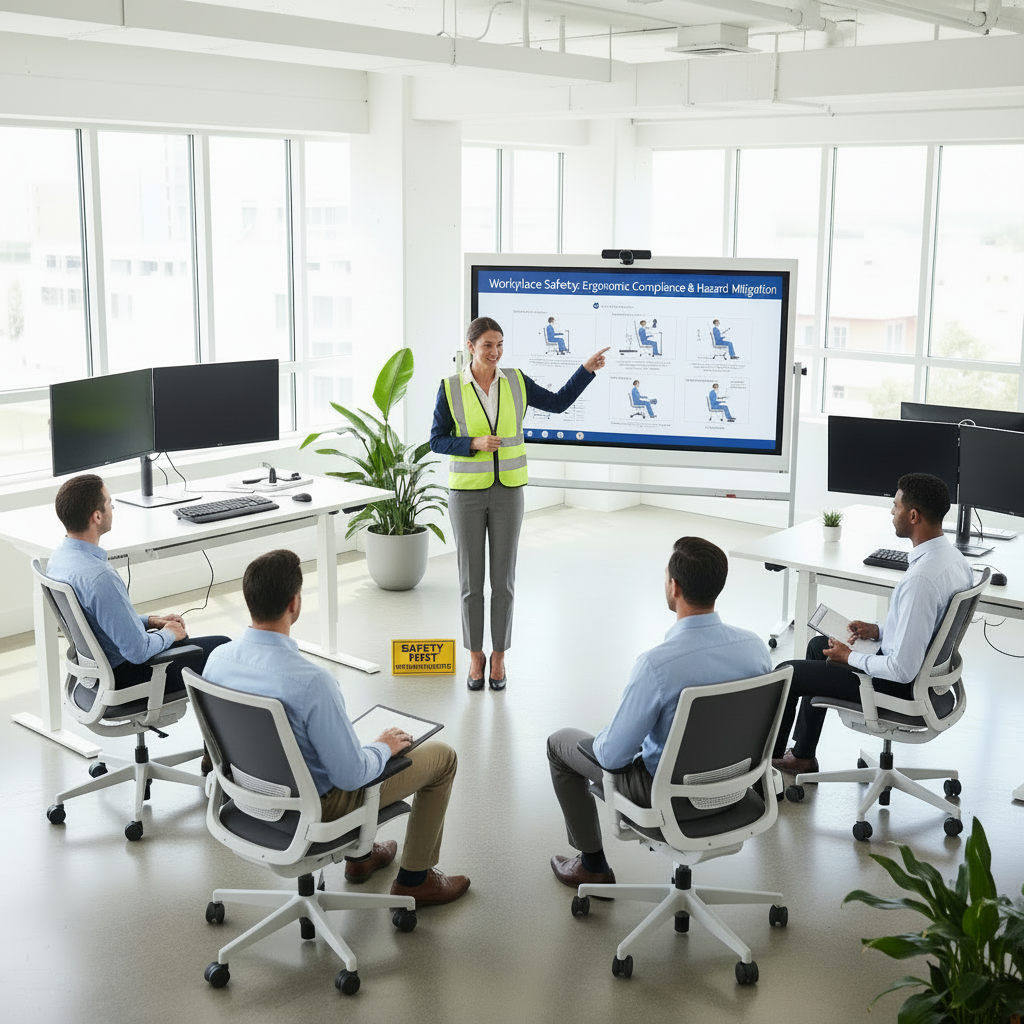
Every effective program starts with teaching employees how to evaluate their own workspaces. They need to understand the concept of neutral posture and why it minimizes joint stress.
When workers know how to adjust their chairs, monitors, and workbenches, they take ownership of their daily physical health.
You should also incorporate regular movement and stretching into the daily routine:
- Reduce muscle stiffness and tension
- Improve blood circulation
- Prevent long-term strain injuries
- Encourage consistent movement habits
Workplace stretching exercises: https://www.ccohs.ca/oshanswers/ergonomics/office/stretching.html
Bridging the Gap Between Office and Industrial Environments
Office workers face a unique set of ergonomic challenges primarily tied to sedentary behavior and poor desk setups. Hunching over a keyboard or staring at a poorly positioned monitor leads to severe neck and shoulder pain.
Training for this group should focus heavily on workstation optimization and frequent micro-breaks.
Join the safety community: https://www.safetyknights.com/join-us
Industrial environments present entirely different hazards involving heavy lifting, vibration, and forceful exertions. Factory floor employees require training on safe lifting techniques and the proper use of material handling equipment.
Key focus areas for industrial ergonomics include:
- Safe lifting and carrying techniques
- Proper tool positioning and reach zones
- Reducing repetitive motion exposure
- Managing vibration and forceful exertions
Despite these differences, the underlying principles of ergonomics remain the same across all departments. The goal is always to fit the job to the worker rather than forcing the worker to adapt to a poorly designed job.
Safety Knights podcasts: https://www.safetyknights.com/podcasts
Leveraging Data to Drive Ergonomic Improvements
Modern safety programs rely heavily on data to identify trends and allocate resources effectively. By tracking leading indicators such as the number of ergonomic assessments completed, you can measure engagement.
This data provides valuable insights into which departments might need additional support or retraining.
Communicating these metrics to upper management helps secure ongoing funding for your safety initiatives. When executives see a direct correlation between training hours and a reduction in workers' compensation claims, they recognize the return on investment.
Safety Knights home: https://www.safetyknights.com/
You should also encourage a robust feedback loop where employees can easily report discomfort or suggest workstation improvements:
- Encourage early reporting of discomfort
- Collect actionable feedback from frontline workers
- Continuously improve workstation design
- Strengthen collaboration between teams
FAQ
Here are answers to common questions about ergonomic training programs:
How often should we conduct ergonomic training?
Training should be integrated into the initial onboarding process for all new hires. Refresher courses should be conducted annually, or whenever new equipment or processes are introduced to the workspace.
What is the most common ergonomic mistake employees make?
Many employees fail to adjust their workstations to their specific body dimensions, often using the previous shift's settings. This forces them into awkward postures that cause significant muscle strain over time.
How do we measure the success of an ergonomic program?
Success is best measured by tracking leading indicators like the completion rate of workstation assessments and employee feedback surveys. Over time, you will also see a reduction in lagging indicators such as reported musculoskeletal disorders.
Can office stretches really prevent severe injuries?
Yes, performing simple stretches throughout the day increases circulation and relieves muscle tension. These brief movements interrupt static postures and significantly reduce the risk of repetitive strain injuries.
Building a Resilient Safety Culture
Protecting your workforce requires a relentless commitment to education and proactive hazard mitigation. When you prioritize ergonomic training, you give your employees the tools they need to perform their jobs safely and comfortably.
This investment pays continuous dividends through higher morale, increased efficiency, and a drastic reduction in painful workplace injuries. Taking the time to build a robust program ensures that your organization remains compliant and genuinely supportive of every team member.
Safety Knights latest content: https://www.safetyknights.com/content
Share
Comments (1)

Apr 13, 2026 at 08:59 AM
And if you need some help - check out our partners https://safetyknights.com/partners/cip-solutions-llc