

Compressed air safety
What are some need to know facts about compressed air safety? I know it poses a hazard, but I’m just not educated enough to enforce the standards at my shop. What are some common things I should be looking for? We mainly use compressed air for instrumentation, pneumatic tools and housekeeping. I’m still pretty new to the field.
Comments (22)

100 psi to penitent your skin.
Blowing dust off clothing creates airborne contamination and can creat a inhalation hazard.


Make sure any pipes that carry compresses are capable of it. Don't use cheap plastic or PVC that could rupture under the pressure.

Aside from what George and Andrew stated, I would also highlight noise. Certain attachments can create high sound pressure levels. Be sure to purchase quieter tools and ensure sound levels are not above your preferred exposure limit.

Place compressed gas cylinders in a well ventilated area away from flames, heat and the sun. When a gas cylinder is fully empty or not in use, ensure that the valve is closed, regulator is removed and valve protector cap is in place.

If it’s being used with a blow gun or to blow off employees, it must be reduced to 30 PSI or below. In addition, based on the task, some conditions would require chip guarding, as well.
If using it for a supplied air respirator (e.g., abrasive blasting), you must ensure it provides Grade D breathing air quality, have a CO and/or high oil temperature alarm.

First, level the compressor and bolt it securely to the floor. Compressors can vibrate and "walk." Also, check fixtures on the compressor regularly, things like the belt/pully machine guarding can vibrate loose.
Also, locate the compressor in an area with some sound shielding afforded by walls. Most compressors are pretty loud, and while they may not exceed noise limits by themselves, they can contribute to overall workplace noise, making communication more difficult.
Also, always install a secondary regulator within operator control close to the point of use. Typical shop compressors put out up to 175 psi air, enough to exceed the design on many tools and applications. Make sure your mainline distribution tubing for house air can handle the compressor's max pressure.

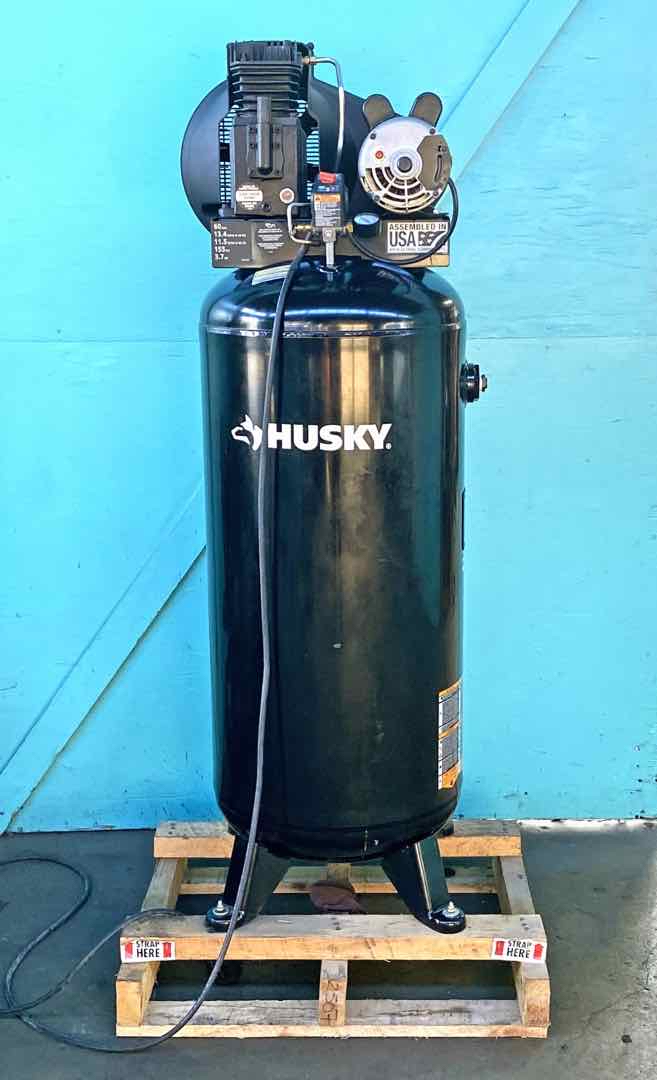
30 PSI is the required air line pressure coming out of your air lines per OSHA, that is the law! Most air compressors like the one above are 100 psi or more! Blowing air on humans is VERY BAD safety practice! This is a fact, I have sent more people to the doctor for "foreign bodies" in the eye(s) than I care to remember! I would estimate probably 100 (I worked in machine shops and foundries) or more. I can only remember one case in 46 years where "blowing air" was not the root cause! That case was grinding with out a face shield or googles! My company had a case in New York where a Maintenance employee impregnated his skin with cutting oil when he blew it into his skin. Got blood poisoning and almost lost his right arm! Also I am puzzled by your statement, "I am not educated enough to enforce the standards in my shop". What does that mean? 30 psi is the law! You have no choice but to enforce it! Perhaps you need some leadership/management classes and educate yourself in OSHA Section 5A, the General Duty Clause. 5A says you must protect your employees, what more you need?