
Safety Knights and 3MotionAI Partner to Help Safety Teams Identify and Reduce Movement-Driven Injury Risk
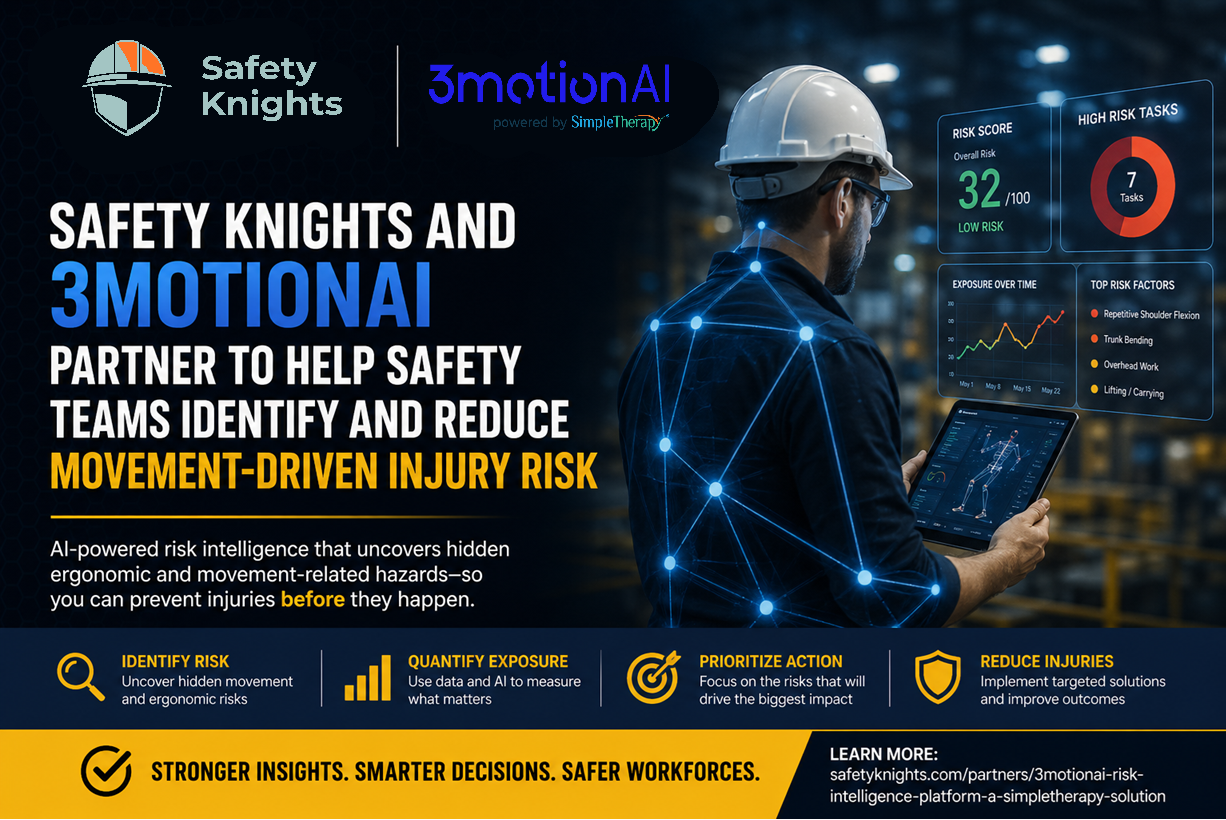
New collaboration connects safety professionals with AI-powered risk intelligence designed to uncover hidden ergonomic and movement-related hazards before injuries occur. [ROCHESTER, NY — APRIL 25, 2026] — Safety Knights, a growing community focused on connecting safety professionals with practical, real-world solutions, today announced a partnership with 3MotionAI, a risk intelligence platform developed by SimpleTherapy that helps organizations identify and reduce movement-driven injury risk across their workforce. Through the partnership, 3MotionAI will join the Safety Knights Preferred Partner Page, giving members direct access to explore how advanced analytics and motion-based insights can strengthen injury prevention strategies. Musculoskeletal injuries remain one of the most persistent and costly challenges in workplace safety, particularly across industries like manufacturing, construction, logistics, utilities, and healthcare. While many safety programs rely on lagging indicators or observational assessments, these approaches often miss the underlying movement patterns and physical stressors that lead to injury over time. 3MotionAI addresses this gap by using AI-powered analysis to evaluate how work is actually performed. By capturing and analyzing movement data, the platform helps organizations identify high-risk tasks, quantify exposure, and prioritize interventions that can reduce strain before injuries occur. Rather than relying solely on reactive measures, 3MotionAI enables safety teams to take a proactive, data-driven approach to ergonomics and injury prevention. The platform provides actionable insights that help organizations redesign work, improve movement efficiency, and reduce cumulative risk across their workforce. Through the Safety Knights partnership, 3MotionAI will gain visibility across the Safety Knights community while also engaging directly with safety leaders looking to modernize their approach to ergonomics and risk management. “Safety teams have been trying to solve musculoskeletal injuries for years, but many are still relying on incomplete data,” said Branden Raczkowski, Director of Safety Knights. “3MotionAI brings a new level of visibility into how work is actually being performed, which allows organizations to identify risks earlier and make more informed decisions. We’re excited to introduce this capability to the Safety Knights community.” By combining Safety Knights’ engaged safety network with 3MotionAI’s AI-driven risk intelligence, the partnership aims to help organizations reduce preventable injuries, improve workforce performance, and build more proactive, data-informed safety programs. Learn More About 3MotionAI https://safetyknights.com/partners/3motionai-risk-intelligence-platform-a-simpletherapy-solution

Ergonomic Risk Assessment: A Complete Guide For Safety Professionals
Workplace safety is no longer just about hard hats and hazard communication. Today, musculoskeletal disorders (MSDs) are quietly draining productivity and driving up workers' compensation costs across nearly every industry. An ergonomic risk assessment is the frontline defense against these invisible injuries, providing safety professionals with the data needed to protect their workforce and their bottom line. Identifying awkward postures, repetitive motions, and forceful exertions before they result in a recordable injury is the cornerstone of proactive risk management. Whether you are observing a manufacturing assembly line or evaluating an office workstation, understanding how to measure and mitigate ergonomic risk is essential. This guide breaks down the most effective assessment tools, the measurable return on investment for ergonomic programs, and how modern technology is transforming the way safety teams identify hazards.
The Hidden Cost of Musculoskeletal Disorders
Musculoskeletal disorders account for a significant portion of workplace injuries, often developing slowly over time due to repeated stress on the body. These injuries affect muscles, nerves, blood vessels, ligaments, and tendons, leading to conditions like carpal tunnel syndrome, tendonitis, and severe back pain. The financial impact of MSDs is staggering. Recent estimates suggest that these disorders cost employers billions of dollars annually in direct medical expenses and workers' compensation claims. Beyond the direct costs, organizations suffer from decreased productivity, increased absenteeism, and lower employee morale when workers are forced to perform their duties in pain or discomfort. Safety Knights home: https://safetyknights.com Implementing a structured ergonomic program is a proven method to counter these costs. By proactively identifying the root causes of physical strain, safety professionals can recommend targeted interventions. This proactive approach not only ensures compliance with health and safety standards but also fosters a culture where employees feel valued and protected.Choosing the Right Ergonomic Assessment Tool
No single ergonomic assessment tool is perfect for every situation. The right choice depends on the specific tasks being performed, the body parts under stress, and the nature of the work environment. Safety professionals must be familiar with a variety of methods to accurately capture risk data.REBA (Rapid Entire Body Assessment)
REBA is designed to evaluate whole-body postures and is particularly useful for tasks that involve unpredictable or varied movements. It assesses the posture of the neck, trunk, legs, and arms, factoring in the force or load being handled. - Best used for manufacturing, healthcare, and warehousing environments - Evaluates dynamic tasks like bending, reaching, and lifting heavy objects - Generates a risk score that helps prioritize intervention efforts If a worker is repeatedly lifting parts from the floor to a workbench, REBA will highlight the stress placed on their lower back and legs, guiding the safety team toward a solution like an adjustable lift table.RULA (Rapid Upper Limb Assessment)
While REBA looks at the whole body, RULA focuses specifically on the upper extremities. It is the tool of choice for evaluating static postures and repetitive tasks involving the arms, wrists, hands, and neck. - Ideal for electronics assembly, quality inspection, and computer workstations - Measures the frequency of movement and the force required - Highlights risks for conditions like carpal tunnel and tendonitis For an employee stationed at a control panel with outstretched arms, a RULA assessment will quickly identify the excessive strain on their shoulders and wrists, prompting necessary workstation adjustments.Revised NIOSH Lifting Equation
When a task involves significant manual lifting, the NIOSH Lifting Equation is the industry standard. It calculates the Recommended Weight Limit (RWL) for a specific lifting task and determines the Lifting Index (LI) to quantify the level of physical stress. - Essential for logistics, construction, and delivery operations - Analyzes variables like lifting height, distance, frequency, and load weight - Provides clear guidelines on safe lifting thresholds Using the NIOSH equation helps safety teams redesign workflows, perhaps by introducing mechanical hoists or altering storage heights, to keep lifting tasks within safe ergonomic limits.RSI (Revised Strain Index)
The Revised Strain Index is a specialized tool for assessing the risk of developing MSDs in the distal upper extremities, specifically the hands, wrists, and elbows. It is highly effective for tasks requiring high-frequency, repetitive hand movements. - Suited for packaging, small parts assembly, and intricate hand tool use - Evaluates grip force, repetition, posture, and duration of exertion - Helps prevent localized injuries that can severely limit a worker's hand functionSnook Tables (Liberty Mutual Material Handling Equations)
Not all manual labor involves lifting. The Snook Tables provide essential data for evaluating tasks that require pushing, pulling, carrying, or lowering objects. - Useful for janitorial work, shipping, and heavy equipment operation - Determines the acceptable forces and weights for a given percentage of the population - Guides the design of safe material handling processes, such as determining the maximum safe load for a manual push cart Safety Knights written programs: https://safetyknights.com/content/written-programsThe Business Case: ROI of Ergonomic Assessments
Safety initiatives are sometimes viewed as pure expenses, but ergonomic assessments offer a clear and compelling return on investment. Investing in ergonomics is not just about compliance; it is a strategic business decision that directly impacts profitability. When safety teams use tools like RULA or NIOSH to identify and eliminate hazards, the frequency and severity of injuries drop. This directly correlates to lower workers' compensation premiums and reduced direct medical costs. Furthermore, ergonomic interventions often streamline work processes. When a workstation is optimized for human performance, unnecessary movements are eliminated. Workers experience less fatigue, allowing them to maintain consistent output throughout their shift. This boost in efficiency, combined with fewer lost workdays, ensures that ergonomic programs quickly pay for themselves. Safety Knights mission: https://safetyknights.com/missionHow AI is Transforming Workspace Optimization
The traditional process of conducting an ergonomic risk assessment can be time-consuming, often requiring safety professionals to manually observe workers with clipboards, stopwatches, and protractors. However, the integration of artificial intelligence and computer vision is revolutionizing this field. AI-powered ergonomic software allows safety teams to capture video of a worker performing a task using a standard smartphone or tablet. The AI algorithm then analyzes the footage, tracking joint movements and automatically applying assessment frameworks like REBA or RULA. - Eliminates the subjectivity and human error inherent in manual assessments - Processes data in real-time, providing immediate risk scores - Allows safety teams to evaluate multiple workstations rapidly - Generates visual reports that clearly demonstrate risks to management and frontline workers This technology empowers safety teams to move from observation to action much faster. By quickly processing large volumes of ergonomic data, organizations can prioritize interventions across their entire operation, ensuring resources are directed to the areas of highest risk. Safety Knights content: https://safetyknights.com/contentBuilding a Proactive Safety Culture
Implementing ergonomic assessments is just the first step. To truly mitigate musculoskeletal risks, organizations must foster a proactive safety culture where employees are actively engaged in the process. Workers are the experts on their own jobs. Safety professionals should encourage employees to report discomfort early, before it becomes a recordable injury. Training programs must educate workers not just on how to lift safely, but on why ergonomic principles matter for their long-term health. When safety teams combine accurate assessment data with worker feedback, they can design workstations and processes that are truly optimized for human performance. This collaborative approach ensures that ergonomic interventions are practical, accepted by the workforce, and effective in the long run.FAQ
Understanding ergonomic risk assessments can be complex, especially when determining the best approach for your specific workplace. Below are answers to some of the most common questions safety professionals have about implementing and managing ergonomic programs.What is the primary goal of an ergonomic risk assessment?
The primary goal is to identify and evaluate physical hazards in the workplace that could lead to musculoskeletal disorders (MSDs). By pinpointing risks like awkward postures and repetitive motions, safety teams can implement changes to protect worker health and improve efficiency.How often should ergonomic assessments be conducted?
Assessments should be conducted whenever a new job or process is introduced, when an employee reports discomfort or an injury, or when an existing workstation is significantly modified. Regular proactive assessments should also be part of an annual safety audit.Can office environments benefit from ergonomic assessments?
Absolutely. Office workers are highly susceptible to MSDs like carpal tunnel syndrome and neck pain due to prolonged sitting and computer use. Tools like RULA and specialized workstation analyses are crucial for optimizing office setups.How does AI improve the ergonomic assessment process?
AI utilizes computer vision to automatically track body movements from video footage, applying tools like REBA or RULA instantly. This reduces the time required for manual observation, eliminates subjective bias, and provides precise, actionable data quickly.Strengthening Your Ergonomic Strategy
By consistently applying the right assessment tools and leveraging new technologies, safety professionals can significantly reduce the physical toll of work on their employees. A strong ergonomic program is a vital component of any comprehensive safety strategy, protecting both the workforce and the financial health of the organization. Safety Knights articles: https://safetyknights.com/content/articles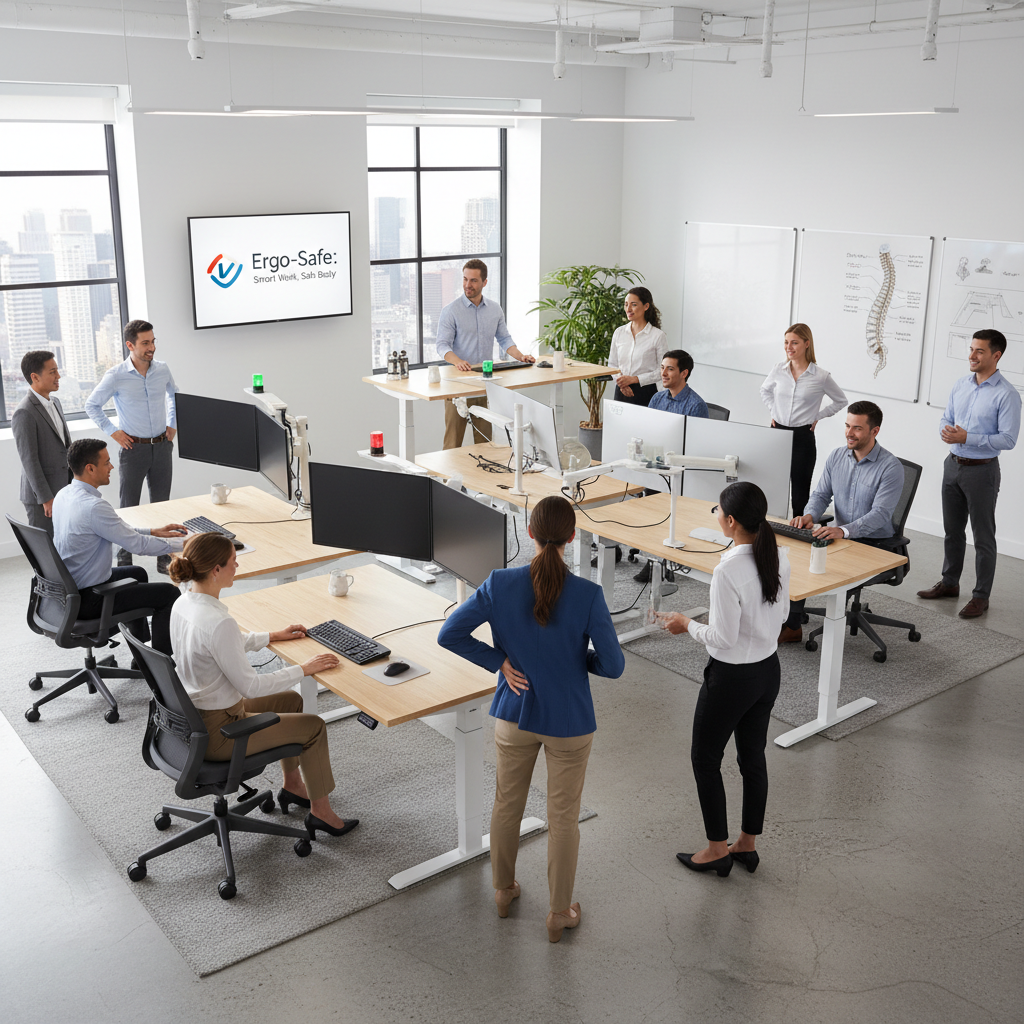
The Ultimate Guide To Workplace Health And Safety Audits
A comprehensive health and safety audit serves as the backbone of a resilient organizational culture. Safety professionals understand that protecting workers goes far beyond simply handing out personal protective equipment or holding an annual meeting. It requires a systematic, rigorous examination of all workplace practices against established regulatory standards. When you proactively assess your environment, you catch critical vulnerabilities before they escalate into serious incidents. An effective audit identifies hidden hazards, evaluates the strength of current control measures, and ensures strict adherence to essential legal frameworks. Safety Knights home: https://safetyknights.com Organizations that embrace regular auditing experience fewer workplace injuries, lower absenteeism, and enhanced employee morale. By empowering your team with the right diagnostic tools, you lay the foundation for a proactive safety culture that adapts to new challenges.
Why Regular Audits Are Vital for Your Organization
Every successful risk management strategy relies on accurate, up-to-date data from the facility floor. Auditing provides leadership with a clear picture of how well safety policies translate into daily operational reality. This visibility is essential for maintaining compliance with major regulatory bodies like OSHA and NEBOSH. Beyond mere compliance, a thorough workplace audit actively protects your most valuable asset: your employees. When workers see management actively investigating risks and investing in corrective actions, their engagement in the safety program naturally increases. High morale often correlates directly with improved productivity and reduced staff turnover. Financial performance also benefits significantly from a robust audit program. Workplace injuries cost employers billions annually in medical expenses, compensation claims, and lost operational time. Identifying and eliminating hazards early drastically reduces these direct and indirect incident costs.Preparing for a Successful Safety Audit
Preparation determines the ultimate effectiveness of any health and safety assessment. You cannot simply walk onto a site with a generic checklist and expect to uncover systemic risks. The process begins with assembling a diverse audit team that brings different perspectives to the table. Include management representatives, frontline workers, and dedicated safety officers to ensure a well-rounded evaluation. Clearly define the specific objectives of the audit before anyone sets foot on the floor. Decide whether the primary focus is regulatory compliance, equipment condition, or evaluating a newly implemented safety protocol. Safety Knights mission: https://safetyknights.com/mission Next, gather and review all relevant historical documentation. This includes previous audit reports, incident logs, employee training records, and maintenance schedules. Reviewing this baseline data highlights recurring issues and points your team toward areas requiring closer inspection.Executing the Field Observation
Field observation requires a meticulous eye for detail and a thorough understanding of industry-specific hazards. Auditors must evaluate both the physical environment and the actual behaviors of workers operating within it. During the walkthrough, pay close attention to the following physical conditions: - Housekeeping practices and general site cleanliness - Condition and regular maintenance of heavy machinery - Storage protocols for hazardous chemicals and materials - Clear visibility of emergency exits and safety signage - Proper usage of required personal protective equipment Physical hazards like uneven walking surfaces, exposed wiring, and poorly guarded machinery often lead to the most common workplace injuries. Auditors must document these conditions accurately, noting their exact locations and the immediate risk they pose to nearby workers. Safety Knights podcasts: https://safetyknights.com/podcastsEngaging Employees Through Interviews
Observing the physical environment only provides half of the safety picture. To truly understand the effectiveness of your risk management program, you must engage directly with the workforce. Employee interviews reveal the reality of how safety protocols are understood and applied on the floor. Ask workers about their specific safety training and whether they feel confident operating their assigned equipment. Inquire about their understanding of emergency response procedures and evacuation routes. Their candid feedback often uncovers gaps in communication or training that management might otherwise overlook. A blame-free reporting environment encourages workers to share their genuine concerns without fear of reprisal. When employees feel respected and heard, they become active participants in the hazard identification process.Customizing Your Audit Checklist
No single safety checklist can perfectly address the unique challenges of every industry. An effective audit framework requires careful customization based on your specific operational environment and technical complexities. For instance, a construction site audit must heavily emphasize terrain analysis, fall protection, and heavy equipment operation. In contrast, a manufacturing facility audit might focus more rigorously on chemical exposure limits, machine guarding, and ergonomic repetitive strain risks. Tailor your assessment modules to match the specific risk profile of the project at hand. Adaptive checklist design ensures that your audit remains a living document that evolves alongside emerging safety technologies and changing operational scopes.Analyzing Audit Findings and Categorizing Nonconformance
Once the physical inspection and interviews conclude, the audit team must systematically analyze the collected data. Categorizing the findings helps prioritize the necessary corrective actions and allocates resources where they are needed most urgently. Major nonconformances represent immediate threats to employee safety or severe violations of regulatory requirements. These critical failures can result in serious incidents or significant legal penalties and demand immediate intervention. Minor nonconformances include procedural deviations that do not pose an imminent threat to life or system integrity. While these issues require correction within a reasonable timeframe, they do not necessitate an immediate halt to daily operations.Developing a Strategic Action Plan
Identifying workplace hazards holds little value if the organization fails to implement effective corrective actions. The audit team must translate their findings into a detailed, actionable plan that assigns clear responsibilities and strict deadlines. Share the audit results and the subsequent action plan transparently with all employees. Clear communication ensures everyone understands the upcoming changes and recognizes management's commitment to continuous safety improvement. Safety Knights content: https://safetyknights.com/content Provide the necessary resources and training to support these operational changes. Whether it involves purchasing updated personal protective equipment or scheduling new compliance seminars, setting your team up for success is paramount.Leveraging Technology in Safety Audits
The days of relying solely on paper checklists and manual data entry are rapidly coming to an end. Forward-thinking safety professionals now integrate advanced digital tools to streamline their auditing processes and improve data accuracy. Mobile audit applications allow inspectors to capture real-time photos of hazards, instantly flag nonconformances, and attach location data directly to the report. This immediate documentation eliminates the administrative burden of transcribing handwritten notes at the end of a long shift. Furthermore, cloud-based safety management systems centralize all historical audit data into a single, accessible dashboard. This connectivity empowers safety managers to identify long-term trends, track the status of corrective actions across multiple facilities, and generate comprehensive compliance reports for executive review.Fostering a Culture of Continuous Improvement
Workplace safety is an ongoing journey rather than a one-time destination. Implementing the corrective actions from a single audit is merely the beginning of a broader commitment to continuous organizational improvement. Establish a systematic schedule for regular follow-up inspections to track the progress of your action plan. Continuous monitoring prevents old habits from resurfacing and ensures that newly implemented safety measures remain effective over time. Encourage employees to continuously report near-misses and new hazards as they arise during daily operations. Utilizing digital tracking systems and mobile reporting platforms can significantly streamline this feedback loop, making real-time safety management a reality.FAQ
Understanding the nuances of workplace health and safety audits helps professionals build stronger, more resilient risk management systems. Below are practical answers to some of the most common questions regarding the auditing process.What are the key elements of a health and safety audit checklist?
An effective checklist must include comprehensive risk assessment documentation, verification of safety compliance parameters, and mechanisms for continuous monitoring. It should cover physical hazards, equipment condition, emergency protocols, and worker training records.How often should an organization perform a safety audit?
The frequency of audits depends on the specific industry, the complexity of operations, and the level of inherent risk. High-risk environments like construction or chemical manufacturing may require monthly or quarterly audits, while lower-risk office settings might only need annual comprehensive reviews.Who should be involved in the safety audit process?
A successful audit requires a diverse team to ensure an unbiased and thorough evaluation. This team typically includes dedicated safety officers, management representatives, frontline employees, and occasionally external third-party auditors for an objective perspective.What is the difference between a major and minor nonconformance?
A major nonconformance is a critical violation of safety regulations that poses an immediate threat to workers or system integrity, requiring instant action. A minor nonconformance is a procedural deviation that does not pose an imminent danger but still requires correction within a specified timeframe.Building Resilient Risk Management Systems
By systematically evaluating your workplace through structured audits, you actively protect your workforce and streamline your operational efficiency. Embracing this diagnostic process transforms safety from a regulatory burden into a powerful driver of organizational excellence. Safety Knights home: https://safetyknights.com
The Ultimate Guide To Passing The ASP Test
Getting your Associate Safety Professional (ASP) certification is one of those moves that actually changes your trajectory. It’s not just a line on a resume. It’s proof you understand safety at a level most people don’t—and that you can apply it in the real world, not just talk about it. If you’re working in EHS and thinking about leveling up, this is usually the first serious step.
What the ASP Certification Actually Means
The ASP isn’t just another test. It’s a credential that signals you know how to identify risk, build safety systems, and make decisions that prevent incidents before they happen. It’s administered by the Board of Certified Safety Professionals (BCSP): https://www.bcsp.org/associate-safety-professional-asp/ The ASP is widely seen as the gateway to the CSP. Most people don’t stop at ASP—but almost everyone serious about safety starts here. If you’re involved in safety programs, managing risk, or supporting operations, this certification tells employers you’re not guessing. You know what you’re doing. Learn more about the Safety Knights mission: https://www.safetyknights.com/missionWhy People Go After the ASP
There’s a reason this certification keeps coming up in job descriptions and conversations. It increases your credibility immediately. Not eventually—immediately. It also tends to open doors. Better roles, more responsibility, and yes, higher pay. But more importantly, it changes how people listen to you. Your recommendations carry weight. It also forces you to actually understand safety at a deeper level. Not just policies—but systems, behavior, and risk. Explore more safety content here: https://www.safetyknights.com/contentASP Eligibility Requirements
Before you even think about scheduling the exam, you need to qualify. You’ll need a bachelor’s degree in any field. If you don’t have that, an associate degree can work—but it needs to include at least four safety, health, or environmental courses totaling 12 credit hours. BCSP eligibility requirements: https://www.bcsp.org/asp/ On top of that, you need at least one year of professional safety experience where safety is at least 50 percent of your role. This isn’t entry-level. The certification assumes you’ve already been in the field and understand how things actually work.What the ASP Exam Looks Like
This isn’t a quick test you knock out in an afternoon. You’re looking at 200 multiple-choice questions with a five-hour time limit. It’s long, and it requires endurance just as much as knowledge. The passing score is around 61 percent, but don’t let that number fool you. The questions are designed to test how you think, not just what you memorize. You’ll get your results immediately after finishing. Testing is conducted through Pearson VUE: https://home.pearsonvue.com/bcspASP Exam Domains Breakdown
The exam is built around nine domains, and understanding these is key to studying the right way. Official exam blueprint: https://www.bcsp.org/wp-content/uploads/2023/10/ASP-Blueprint.pdfMathematical Calculations (10%)
You’ll deal with things like ventilation rates, noise exposure, and basic statistics. OSHA exposure limits and calculations often come into play: https://www.osha.gov/laws-regsSafety Programs and Concepts (25%)
This is the big one. Hazard controls, safety systems, electrical safety, and machine guarding. ISO 45001 overview: https://www.iso.org/iso-45001-occupational-health-and-safety.htmlErgonomics
Expect questions around repetitive motion, posture, and designing work to fit people. NIOSH ergonomics resources: https://www.cdc.gov/niosh/topics/ergonomics/Fire Prevention and Protection (12%)
Fire science basics, suppression systems, and understanding how fires start and spread. NFPA codes and standards: https://www.nfpa.org/Codes-and-StandardsEmergency Preparedness and Response (10%)
Planning for worst-case scenarios—natural disasters, workplace violence, and emergency response systems. FEMA emergency preparedness guidance: https://www.ready.gov/Industrial Hygiene and Occupational Health (12%)
Exposure risks, biological hazards, and occupational limits. NIOSH exposure guidelines: https://www.cdc.gov/niosh/topics/exposure/Environmental Management (7%)
Air, water, and waste compliance. EPA environmental standards: https://www.epa.gov/laws-regulationsTraining, Education, and Communication (11%)
How people actually learn and how to make safety training stick. OSHA training requirements: https://www.osha.gov/trainingLegal (5%)
Compliance, liability, and regulatory frameworks. OSHA compliance overview: https://www.osha.gov/complianceHow to Actually Prepare for the ASP
Most people fail this exam because they underestimate it. Start with the blueprint and be honest about what you don’t know. Then build a study plan around the highest-weighted areas first. Practice exams are non-negotiable. BCSP exam prep tools: https://www.bcsp.org/exam-preparation/ Also, don’t study in isolation if you can avoid it. Talking through concepts with other safety professionals helps things click faster. If you want to stay plugged into real-world safety conversations, check out the Safety Knights community: https://www.safetyknights.comFAQ
A lot of people hesitate to start because they don’t understand the logistics. Here’s what actually matters.How much does the ASP certification cost?
There’s a 160 dollar application fee and a 350 dollar exam fee. Full fee details: https://www.bcsp.org/asp/How many questions are on the ASP exam?
You’ll face 200 multiple-choice questions covering all nine domains.How long is the exam?
You get five hours. Time management matters more than most people expect.What score do you need to pass?
Roughly 61 percent, but the difficulty of the questions makes this far from easy.Is the ASP worth it?
If you’re serious about a long-term career in safety, yes. It’s one of the clearest signals that you know how to do the job—not just talk about it.What Comes After the ASP
Most people don’t stop here. The ASP is usually the step before the CSP. Certified Safety Professional (CSP): https://www.bcsp.org/certified-safety-professional-csp/ But even on its own, the ASP changes how you’re viewed. It shows you’ve put in the work, understand the fundamentals, and can apply them where it matters most—on the floor, not just on paper. Safety Knights home: https://www.safetyknights.com
Why Ergonomic Training Prevents Workplace Injuries
Workplace injuries often develop silently over months or years of repetitive motion and awkward postures. Safety professionals understand that musculoskeletal disorders represent one of the most significant risks to employee health and company productivity. When workers operate in environments that ignore human body mechanics, they face increased fatigue, discomfort, and eventually debilitating pain. Implementing an ergonomic training program transforms how employees interact with their workstations and equipment.
Context and Background
Educating your workforce on proper biomechanics empowers them to identify risks before injuries occur. This proactive approach shifts the focus from treating symptoms to eliminating hazards at their source. When organizations invest in comprehensive ergonomic education, they build a foundation of lasting safety culture. Employees who understand the principles of ergonomics are far more likely to make micro-adjustments throughout their shifts. These small changes dramatically reduce the physical stress placed on their bodies and decrease overall incident rates. Safety Knights mission: https://www.safetyknights.com/missionThe Hidden Costs of Reactive Safety Measures
Relying solely on lagging indicators like injury reports means you are always one step behind the problem. By the time an employee reports carpal tunnel syndrome or chronic back pain, the damage has already been done. Medical costs, lost workdays, and decreased productivity quickly drain organizational resources. Ergonomics guidelines from OSHA: https://www.osha.gov/ergonomics A reactive approach also damages employee morale and trust in leadership. Workers want to feel that their employer genuinely cares about their long-term health and well-being. Failing to provide adequate training sends the message that production matters more than human safety. We can reverse this trend by equipping teams with the knowledge to recognize early warning signs of physical strain. Regular ergonomic assessments combined with continuous education create an environment where safety remains a top priority.Core Elements of Effective Ergonomic Training
A successful training initiative requires more than just a one-time seminar or a stack of printed handouts. It demands a structured curriculum tailored to the specific risks present in your facility. You must address the unique challenges faced by both office staff and industrial workers. Safety Knights content: https://www.safetyknights.com/content Every effective program starts with teaching employees how to evaluate their own workspaces. They need to understand the concept of neutral posture and why it minimizes joint stress. When workers know how to adjust their chairs, monitors, and workbenches, they take ownership of their daily physical health. You should also incorporate regular movement and stretching into the daily routine: - Reduce muscle stiffness and tension - Improve blood circulation - Prevent long-term strain injuries - Encourage consistent movement habits Workplace stretching exercises: https://www.ccohs.ca/oshanswers/ergonomics/office/stretching.htmlBridging the Gap Between Office and Industrial Environments
Office workers face a unique set of ergonomic challenges primarily tied to sedentary behavior and poor desk setups. Hunching over a keyboard or staring at a poorly positioned monitor leads to severe neck and shoulder pain. Training for this group should focus heavily on workstation optimization and frequent micro-breaks. Join the safety community: https://www.safetyknights.com/join-us Industrial environments present entirely different hazards involving heavy lifting, vibration, and forceful exertions. Factory floor employees require training on safe lifting techniques and the proper use of material handling equipment. Key focus areas for industrial ergonomics include: - Safe lifting and carrying techniques - Proper tool positioning and reach zones - Reducing repetitive motion exposure - Managing vibration and forceful exertions Despite these differences, the underlying principles of ergonomics remain the same across all departments. The goal is always to fit the job to the worker rather than forcing the worker to adapt to a poorly designed job. Safety Knights podcasts: https://www.safetyknights.com/podcastsLeveraging Data to Drive Ergonomic Improvements
Modern safety programs rely heavily on data to identify trends and allocate resources effectively. By tracking leading indicators such as the number of ergonomic assessments completed, you can measure engagement. This data provides valuable insights into which departments might need additional support or retraining. Communicating these metrics to upper management helps secure ongoing funding for your safety initiatives. When executives see a direct correlation between training hours and a reduction in workers' compensation claims, they recognize the return on investment. Safety Knights home: https://www.safetyknights.com/ You should also encourage a robust feedback loop where employees can easily report discomfort or suggest workstation improvements: - Encourage early reporting of discomfort - Collect actionable feedback from frontline workers - Continuously improve workstation design - Strengthen collaboration between teamsFAQ
Here are answers to common questions about ergonomic training programs:How often should we conduct ergonomic training?
Training should be integrated into the initial onboarding process for all new hires. Refresher courses should be conducted annually, or whenever new equipment or processes are introduced to the workspace.What is the most common ergonomic mistake employees make?
Many employees fail to adjust their workstations to their specific body dimensions, often using the previous shift's settings. This forces them into awkward postures that cause significant muscle strain over time.How do we measure the success of an ergonomic program?
Success is best measured by tracking leading indicators like the completion rate of workstation assessments and employee feedback surveys. Over time, you will also see a reduction in lagging indicators such as reported musculoskeletal disorders.Can office stretches really prevent severe injuries?
Yes, performing simple stretches throughout the day increases circulation and relieves muscle tension. These brief movements interrupt static postures and significantly reduce the risk of repetitive strain injuries.Building a Resilient Safety Culture
Protecting your workforce requires a relentless commitment to education and proactive hazard mitigation. When you prioritize ergonomic training, you give your employees the tools they need to perform their jobs safely and comfortably. This investment pays continuous dividends through higher morale, increased efficiency, and a drastic reduction in painful workplace injuries. Taking the time to build a robust program ensures that your organization remains compliant and genuinely supportive of every team member. Safety Knights latest content: https://www.safetyknights.com/content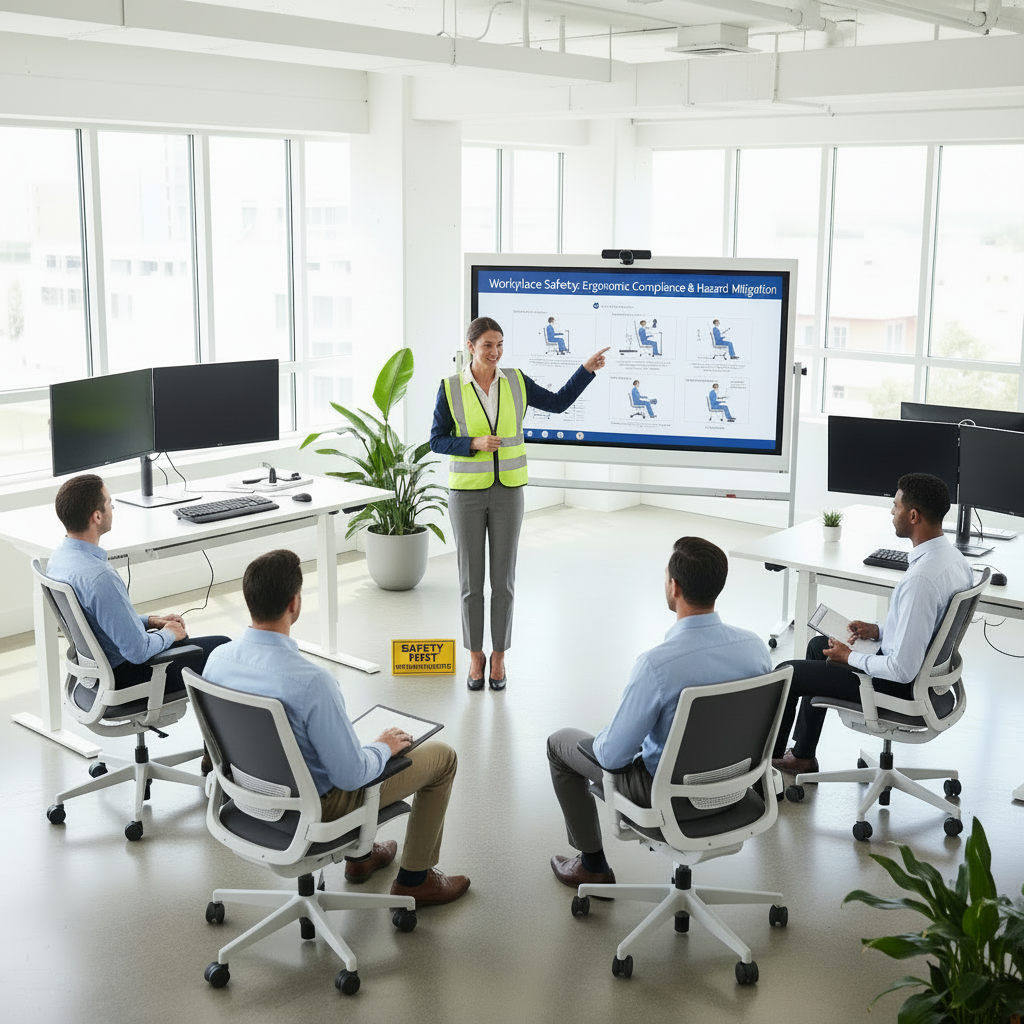
Safety Knights and MyTERA Partner to Strengthen Industrial Hygiene Programs
New collaboration connects safety professionals with modern industrial hygiene technology designed to simplify exposure management and improve worker health outcomes. [ROCHESTER, NY — MARCH 28, 2026] — Safety Knights, a growing community focused on connecting safety professionals with practical, real-world solutions, today announced a partnership with MyTERA, an innovative industrial hygiene platform built to help organizations better understand, manage, and reduce workplace exposure risks. Through the partnership, MyTERA will join the Safety Knights Preferred Partner Page, giving members direct access to explore how technology is reshaping the future of occupational health. Workplace health hazards remain one of the most significant — and under-addressed — challenges across global industry. According to the International Labour Organization (ILO), approximately 2.78 million work-related deaths occur each year, with 2.4 million attributed to occupational illnesses. Hazardous exposures to chemicals, radiation, and other substances account for nearly 41% of these fatalities, equating to two worker deaths every minute. At the same time, the challenge continues to grow in complexity. New chemical substances are introduced at a rapid pace, with millions now in circulation, while the global workforce exposed to hazardous conditions continues to expand. Despite this, there are only an estimated 20,000 industrial hygienists worldwide supporting over 1.4 billion workers exposed to occupational health risks—creating a massive gap between hazard exposure and the resources available to manage it. MyTERA was built to help close that gap. Rather than relying solely on limited IH resources and fragmented systems, MyTERA provides a centralized, technology-driven approach to industrial hygiene. The platform consolidates health hazards, tasks, processes, and environmental conditions into structured Task Exposure Risk Assessments (TERAs)—giving organizations a clear, standardized way to evaluate and control workplace exposures. By bringing together multiple data streams into a single, user-friendly system, MyTERA enables safety teams to: Characterize health hazards across chemical, physical, biological, ergonomic, and psychosocial risks Standardize risk evaluations using defined parameters to reduce subjectivity and inconsistency Integrate sampling data such as air monitoring, noise dosimetry, biological exposure tracking, and radiation monitoring Centralize control recommendations to improve accessibility and maximize time spent in the field Strengthen compliance with key programs such as Hazard Communication, PPE, and Respiratory Protection This unified approach allows organizations - especially those without dedicated industrial hygiene resources - to take a more proactive, scalable approach to protecting worker health. Through the Safety Knights partnership, MyTERA will gain visibility across a highly engaged network of safety professionals while also directly supporting organizations looking to modernize and scale their industrial hygiene programs. “Industrial hygiene is one of the biggest blind spots in many organizations—not because people don’t care, but because it’s incredibly complex and resource-intensive,” said Branden Raczkowski, Director of Safety Knights. “MyTERA is tackling a global problem by making industrial hygiene more accessible, structured, and actionable. We’re excited to bring this capability to the Safety Knights community.” By combining Safety Knights’ engaged safety network with MyTERA’s innovative IH platform, the partnership aims to help organizations better understand exposure risks, improve compliance, and ultimately reduce the long-term health impacts facing today’s workforce. Learn More About MyTERA https://safetyknights.com/partners/mytera About Safety Knights Safety Knights is a community-driven recruiting and workforce platform built exclusively for EHS and Safety teams. Backed by a highly engaged network of 15,000+ safety professionals and more than 30 years of real-world safety and safety-tech experience, Safety Knights connects organizations with vetted, credible talent and leading industry organizations. Through strategic collaborations, content, and hands-on initiatives, Safety Knights helps companies strengthen safety culture, improve compliance, and elevate operational performance. About MyTERA MyTERA is a modern industrial hygiene platform designed to address the growing global challenge of occupational health risks. By leveraging structured Task Exposure Risk Assessments (TERAs), MyTERA consolidates workplace hazards, environmental conditions, and exposure data into a centralized system that enables organizations to evaluate, manage, and control health risks more effectively. Built for organizations of all sizes, MyTERA helps bridge the gap between limited industrial hygiene resources and the increasing complexity of workplace exposures.
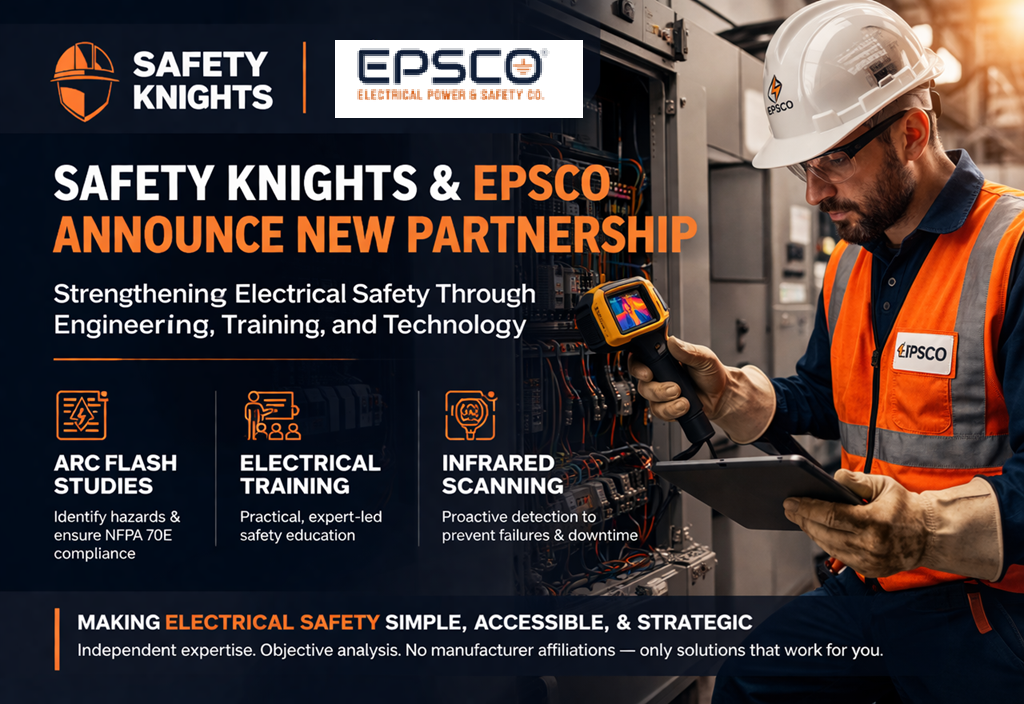
Safety Knights and EPSCO Partner to Strengthen Electrical Safety Programs
New collaboration connects safety professionals with electrical safety engineering solutions designed to simplify compliance and reduce risk in complex industrial environments. [ROCHESTER, NY — MARCH 21, 2026] — Safety Knights, a growing community focused on connecting safety professionals with practical, real-world solutions, today announced a partnership with EPSCO, an electrical power and safety engineering group focused on making electrical safety more simple, accessible, and effective for organizations across industry. Through the partnership, EPSCO will join the Safety Knights Preferred Partner Page, giving members direct access to learn more about their electrical safety engineering services and compliance solutions. Electrical hazards remain one of the most serious and potentially catastrophic risks across industrial and commercial environments. From arc flash incidents to improper system maintenance and limited workforce training, organizations often struggle to balance compliance requirements with real-world operational demands. EPSCO addresses these challenges by combining the technical expertise of engineers, the safety insight of compliance professionals, and the hands-on experience of electricians. This integrated approach provides organizations with a more complete and practical understanding of their electrical risk profile. Their core services include arc flash studies, electrical safety training, and infrared thermography scanning—helping organizations identify hazards, improve compliance with standards such as NFPA 70E, and proactively prevent failures before they lead to incidents or downtime. Because EPSCO operates independently from equipment manufacturers, their assessments and recommendations are objective and focused entirely on the needs of the customer. This allows safety and operations teams to make more informed, strategic decisions around electrical safety investments and risk mitigation. Through the Safety Knights partnership, EPSCO will gain visibility across the Safety Knights community while also engaging directly with safety leaders looking to strengthen their electrical safety programs. “Electrical safety is one of those areas where the margin for error is extremely small, and the consequences can be severe,” said Branden Raczkowski, Director of Safety Knights. “EPSCO brings a really well-rounded approach by combining engineering expertise with real-world field experience. We’re excited to introduce their team to the Safety Knights community.” By combining Safety Knights’ engaged safety network with EPSCO’s electrical safety engineering expertise, the partnership aims to help organizations improve compliance, reduce electrical risk, and build safer, more resilient operations. Learn More About EPSCO https://safetyknights.com/partners/epsco About Safety Knights Safety Knights is a community-driven recruiting and workforce platform built exclusively for EHS and Safety teams. Backed by a highly engaged network of 15,000+ safety professionals and more than 30 years of real-world safety and safety-tech experience, Safety Knights connects organizations with vetted, credible talent and leading industry organizations. Through strategic collaborations, content, and hands-on initiatives, Safety Knights helps companies strengthen safety culture, improve compliance, and elevate operational performance. About EPSCO EPSCO is an electrical power and safety engineering group focused on making electrical safety simple and accessible. By combining the expertise of engineers, compliance professionals, and experienced electricians, EPSCO delivers a comprehensive approach to electrical risk management. Their services include arc flash studies, electrical safety training, and infrared scanning, helping organizations stay compliant, reduce risk, and operate more strategically. As an independent provider, EPSCO delivers objective assessments and practical recommendations tailored to each facility.
Safety Knights and CIP Solutions Partner to Help Prevent Ergonomic Injuries in the Workforce
New collaboration connects safety professionals with onsite injury prevention programs designed to strengthen workforce resilience and reduce preventable strain injuries. [ROCHESTER, NY — MARCH 14, 2026] — Safety Knights, a growing community focused on connecting safety professionals with practical, real-world solutions, today announced a partnership with CIP Solutions, a provider of onsite ergonomic injury prevention and workforce performance services. Through the partnership, CIP Solutions will join the Safety Knights Preferred Partner Page, giving members direct access to learn more about their approach to reducing ergonomic injuries and strengthening workforce resilience. Musculoskeletal and ergonomic injuries remain one of the most common sources of workplace incidents, lost time, and workers’ compensation costs across industries such as construction, utilities, manufacturing, logistics, and field services. Many of these injuries develop gradually through repetitive motion, awkward positioning, and physical strain that can be difficult for safety programs to address through traditional training alone. CIP Solutions focuses on preventing these injuries before they occur by embedding certified athletic trainers directly into the workplace. Their programs combine ergonomic risk assessments, movement coaching, and workforce readiness initiatives designed to help employees build safer work habits and reduce exposure to strain-related injuries. Rather than focusing only on incidents after they occur, CIP Solutions works alongside crews in the field to support safer work mechanics, early identification of strain, and practical strategies that help workers stay healthy and productive. Through the Safety Knights partnership, CIP Solutions will gain visibility across the Safety Knights community while also engaging directly with safety leaders seeking proactive approaches to injury prevention. “Many safety teams are looking for ways to move upstream in their safety programs and prevent injuries before they become recordables,” said Branden Raczkowski, Director of Safety Knights. “CIP Solutions takes a very practical approach by working directly with crews and helping employees build the physical habits that support safer work. We’re excited to introduce their team to the Safety Knights community.” By combining Safety Knights’ engaged safety network with CIP Solutions’ field-based injury prevention programs, the partnership aims to help organizations strengthen workforce resilience, reduce ergonomic injuries, and support healthier, more sustainable work environments. Learn More About CIP Solutions https://safetyknights.com/partners/cip-solutions-llc About Safety Knights Safety Knights is a community-driven recruiting and workforce platform built exclusively for EHS and Safety teams. Backed by a highly engaged network of 15,000+ safety professionals and more than 30 years of real-world safety and safety-tech experience, Safety Knights connects organizations with vetted, credible talent and leading industry organizations. Through strategic collaborations, content, and hands-on initiatives, Safety Knights helps companies strengthen safety culture, improve compliance, and elevate operational performance. About CIP Solutions CIP Solutions provides onsite injury prevention programs designed to help organizations reduce ergonomic injuries and improve workforce resilience. Through embedded certified athletic trainers, ergonomic risk assessments, and movement-based coaching, CIP Solutions works directly with crews to build safer work habits, reduce strain-related injuries, and support long-term workforce health and performance.
Safety Knights and EHS Momentum Partner to Expand Access to Modern EHS Software Solutions
**New collaboration connects safety professionals with scalable EHS management tools designed to streamline compliance and operational risk management.** **[ROCHESTER, NY — MARCH 5, 2026]** — Safety Knights, a growing community focused on connecting safety professionals with practical, real-world solutions, today announced a partnership with **EHS Momentum**, an emerging provider of modern Environmental, Health & Safety (EHS) software. Through the partnership, EHS Momentum will join the **Safety Knights Preferred Partner Page**, giving members direct access to learn more about the platform and explore how it can support their safety programs. The partnership is designed to help safety leaders evaluate modern EHS software options as organizations increasingly look to move beyond outdated systems and manual processes. For many safety professionals, managing incidents, inspections, training records, and compliance requirements across multiple facilities can quickly become complex and time-consuming. Legacy platforms and spreadsheet-based systems often create inefficiencies that make it difficult to maintain visibility into operational risk and safety performance. EHS Momentum’s platform is designed to simplify these challenges by providing a flexible, user-friendly system that helps safety teams manage key workflows including incident management, inspections, corrective actions, and compliance tracking within a single environment. Through the Safety Knights partnership, EHS Momentum will gain visibility across the Safety Knights community while also engaging directly with safety professionals seeking practical software solutions that support operational performance without unnecessary complexity. “Many safety leaders we speak with are frustrated with legacy EHS software that feels expensive, rigid, and difficult for frontline teams to use,” said **Branden Raczkowski, Director of Safety Knights**. “EHS Momentum brings a fresh approach focused on usability, flexibility, and real-world safety operations. We’re excited to introduce their platform to our community as a trusted partner.” By combining Safety Knights’ engaged safety community with EHS Momentum’s modern EHS platform, the partnership aims to help organizations identify practical tools that strengthen compliance programs, improve visibility into risk, and support safer workplaces. **Learn More About EHS Momentum** https://safetyknights.com/partners/ehs-momentum --- ## About Safety Knights Safety Knights is a community-driven recruiting and workforce platform built exclusively for EHS and Safety teams. Backed by a highly engaged network of 15,000+ safety professionals and more than 30 years of real-world safety and safety-tech experience, Safety Knights connects organizations with vetted, credible talent and leading industry organizations. Through strategic collaborations, content, and hands-on initiatives, Safety Knights helps companies strengthen safety culture, improve compliance, and elevate operational performance. ## About EHS Momentum EHS Momentum provides modern Environmental, Health & Safety (EHS) software designed to help organizations streamline safety management, simplify compliance, and improve visibility into operational risk. Built with usability and flexibility in mind, the platform enables safety teams to manage incidents, inspections, corrective actions, and safety programs through an intuitive digital environment that supports both frontline workers and leadership teams.
How to Prepare for the CSP Exam: Blueprint, Topics, and Study Tips
Achieving the Certified Safety Professional credential is a transformative milestone for anyone dedicated to workplace safety. It demonstrates a profound understanding of hazard mitigation, regulatory compliance, and risk management at an advanced level. For safety leaders looking to build a robust safety culture, this certification serves as a recognized mark of excellence. Safety Knights home: https://www.safetyknights.com Navigating the path to this certification requires dedication, practical experience, and a deep familiarity with complex safety principles. You must understand how to protect workers while balancing the operational needs of your organization. This guide provides a comprehensive overview of the examination, eligibility requirements, and strategies to help you succeed. Learn more about our mission: https://www.safetyknights.com/mission By understanding the exact requirements and examination domains, you can streamline your preparation process. We will explore everything from educational prerequisites to the specific topics covered on the test. Our goal is to empower you with the practical advice needed to advance your career and protect your workforce.
What is the Certified Safety Professional Credential?
The Certified Safety Professional certification is awarded by the Board of Certified Safety Professionals. It is widely considered the gold standard for practitioners who have significant responsibility for safety leadership in their organizations. Official CSP certification overview: https://www.bcsp.org/certified-safety-professional-csp Professionals holding this credential take the lead in setting an organizational safety culture. They influence corporate leaders, secure worker buy-in, and implement comprehensive safety management systems. Their daily responsibilities often include: -Identifying workplace hazards -Assessing operational risks -Investigating incidents to prevent future occurrences -Designing and implementing safety programs Join the safety conversation: https://www.safetyknights.com/join-us Earning this credential proves you have the knowledge required for practical implementation of safety protocols. It shows employers and regulatory bodies that you are fully equipped to handle emergency response plans and environmental management systems. This level of expertise is vital for reducing incident rates and ensuring strict adherence to compliance standards.Eligibility Requirements for the CSP Exam
Before you can sit for the examination, you must meet specific educational and professional criteria. These requirements ensure that all candidates possess a foundational level of academic knowledge and hands-on experience. Review credentials at a glance: https://www.bcsp.org/credentials-at-a-glance The board strictly enforces these prerequisites to maintain the high standards associated with the certification. You must gather your transcripts, employment records, and proof of prior certifications before beginning your application. Meeting these standards is your first step toward proving your commitment to the safety profession.Educational Prerequisites
Candidates must hold a minimum of a bachelor degree in any field. If your degree was earned outside the United States, it must be evaluated for equivalent academic standards. This ensures a baseline of critical thinking and analytical skills necessary for complex risk management. Submit an article about your safety education journey: https://www.safetyknights.com/content You do not necessarily need a degree specifically in occupational health or safety, though it can be highly beneficial. The focus is on your ability to process information, apply scientific principles, and manage organizational programs.Required Safety Experience
You must have at least four years of professional safety experience. This experience must be at a professional, preventative level where safety duties make up at least fifty percent of your role. Read stories from other professionals: https://www.safetyknights.com/content/article Your job history should demonstrate a breadth and depth of safety responsibilities. This includes tasks like conducting audits, developing training programs, and managing compliance reporting. Roles that are strictly administrative or purely observational will not meet this rigorous standard.Qualifying Credentials
In addition to education and experience, you must hold a board-approved qualifying credential. The most common pathway is holding the Associate Safety Professional designation. Other acceptable credentials include the Graduate Safety Practitioner or the Certified Industrial Hygienist. Holding one of these prerequisite certifications proves you have already mastered the fundamental concepts of occupational health and safety.The CSP Application Process and Fees
Applying for the certification involves submitting your credentials through the official online portal. You will need to create a profile, fill out your professional history, and upload necessary documentation. You must also disclose any prior criminal convictions or professional license suspensions during this process. The board reviews these matters confidentially to ensure all candidates uphold the ethical standards of the profession. Safety Knights announcements and updates: https://www.safetyknights.com/announcement The financial investment includes: -Application fee of $160 -Examination authorization fee of $350 for a single attempt Once your application is approved, you have exactly one year to schedule and complete the examination.Breaking Down the CSP Exam Blueprint
The examination blueprint outlines the exact domains and skills you will be tested on. It is developed by industry experts who regularly conduct job task analyses to ensure the test reflects modern safety challenges. Official CSP Exam Blueprint: https://www.bcsp.org/hubfs/Website/Blueprints-References/CSP-Blueprint.pdf Understanding this blueprint is the most effective way to structure your study plan. The test consists of multiple-choice questions delivered via computer, and you are given five and a half hours to complete it. Discover safety podcasts to aid your study: https://www.safetyknights.com/podcasts The examination is divided into seven distinct domains, each weighted differently. Focusing your preparation on the most heavily weighted sections will maximize your chances of success.Advanced Application of Safety Principles
This domain makes up twenty-five percent of the examination and covers the core principles of hazard minimization. You must understand prevention through design, process safety, and the hierarchy of controls. Key concepts in this domain include: -Electrical hazards -Confined space safety -Fall protection -Materials handling -Facility life safety systemsProgram Management
Also accounting for twenty-five percent of the test, this section focuses on your leadership and organizational skills. You will need to demonstrate knowledge of safety management systems, leading and lagging indicators, and budget development. Safety Knights hustle and leadership tips: https://www.safetyknights.com/hustle Important topics include: -Safety management systems -Data interpretation and metrics -Project management principles -Document control and retention practicesRisk Management
Risk management represents fifteen percent of the assessment. You must understand how to identify, analyze, evaluate, and communicate risks affecting an entire organization. Topics covered include: -Job hazard analysis -Process hazard analysis -Risk transfer strategies -Loss prevention planningEmergency and Environmental Management
Emergency management covers nine percent of the exam, focusing on disaster response, business continuity, and workplace violence prevention. Environmental management accounts for six percent of the questions and focuses on: -Hazardous waste disposal -Pollution prevention strategies -Sustainability principlesOccupational Health and Training
Occupational health and applied science make up ten percent of the blueprint. You will be evaluated on your understanding of toxicology, epidemiology, ergonomics, and industrial hygiene sampling. The final ten percent focuses on training and adult learning principles, including: -Conducting training needs assessments -Developing safety training materials -Measuring training effectivenessPreparing for Exam Day
Success requires a structured study plan that covers all seven domains thoroughly. Many professionals use online preparation courses, study guides, and peer study groups to reinforce their knowledge. You should take practice tests to familiarize yourself with the question format and manage your time effectively. The five and a half hours provided is generous, but pacing yourself is crucial to avoid fatigue. Official exam preparation resources: https://examcore.org/online-exam-prep/csp The test is administered at Pearson VUE testing centers worldwide. You will receive your official results immediately after completing the computer-based exam.Maintaining Your CSP Certification
Achieving the certification is only the beginning of your professional journey. To retain your credential, you must pay an annual renewal fee of $180. You are also required to earn twenty-five recertification points every five years. This ensures that you remain current with evolving industry standards, new regulations, and emerging technologies. Recertification points can be earned through: -Continuing education courses -Attending safety conferences -Publishing safety content -Participating in professional organizations -Staying active in professional communities is an excellent way to meet these ongoing requirements.FAQ
Understanding the specific details of the examination process can alleviate anxiety and help you plan effectively. Below are answers to some of the most common questions professionals ask when pursuing this credential.How many questions are on the CSP exam?
The examination consists of 200 multiple-choice questions. You are given five and a half hours to complete the test at a designated computer-based testing center.How much does the CSP certification cost?
The initial application fee is $160 and the examination fee is $350. Once certified, you must pay an annual renewal fee of $180 to maintain active status.What is the passing score for the CSP exam?
The board does not publish a fixed passing score or pass rate. Passing scores are determined through a statistical process involving subject matter experts to ensure fairness across different versions of the exam.How long do I have to take the exam after applying?
Once your application is approved, you have exactly one year to purchase your exam authorization, schedule your testing appointment, and take the examination. Earning this credential is a powerful way to demonstrate your expertise and commitment to protecting human life in the workplace. By understanding the requirements, mastering the knowledge domains, and committing to continuous learning, you position yourself as a vital asset to any organization.
Construction Safety Management: A Complete Guide For 2026
Construction sites remain among the most hazardous work environments. Nearly 1 in 5 workplace deaths occur in construction, with falls alone accounting for 38.5% of construction fatalities in 2023. Effective safety management systems can prevent these tragedies while improving productivity and reducing costs. This guide explores the essential elements of construction safety management, from regulatory frameworks to practical implementation strategies. Whether you're a safety manager, contractor, or project lead, you'll find actionable guidance to strengthen your safety program.
Understanding Construction Safety Management Systems
A construction safety management system provides the framework for identifying hazards, implementing controls, and continuously improving workplace safety. Rather than reacting to incidents after they occur, these systems take a proactive approach to finding and fixing hazards before workers get hurt. OSHA defines seven core elements that form the foundation of effective safety programs in construction. These elements work together to create a culture where safety becomes part of every decision, from project bidding to final completion. The benefits extend beyond injury prevention. Companies with strong safety management systems see reduced workers' compensation costs, improved employee engagement, and enhanced compliance with regulations. Many also report increased productivity as workers feel more confident and protected on the job. OSHA construction safety programs guide: https://www.osha.gov/sites/default/files/publications/OSHA3886.pdfThe Seven Core Elements of Construction Safety Programs
Find out the core elements of different construction safety programs.Management Leadership
Leadership commitment sets the tone for safety culture. Top management must demonstrate that safety ranks equally with schedule and budget in business decisions. This commitment shows up in tangible ways. Safety equipment gets included in project budgets. Managers conduct regular toolbox talks. Safety considerations influence subcontractor selection and project scheduling. When leaders prioritize safety visibly and consistently, workers take it seriously too. Effective leaders also set clear goals, allocate adequate resources, and hold everyone accountable for safety performance. They make safety a core organizational value rather than just a compliance checkbox.Worker Participation
Workers on the job site possess firsthand knowledge of hazards and practical control measures. Their active participation strengthens every aspect of the safety program. - Involvement in daily planning meetings and toolbox talks - Reporting hazards and near misses without fear of retaliation - Investigating incidents to identify root causes - Contributing to safety goal-setting and improvement initiativesHazard Identification and Assessment
Construction sites present unique challenges for hazard identification. Conditions change rapidly as projects progress, new trades arrive, and work sequences shift. A competent person should conduct frequent inspections covering all areas and activities. This includes trenching operations, work at heights, materials storage, equipment maintenance, and the activities of all contractors and subcontractors. Effective hazard assessment also requires planning ahead. Anticipate how upcoming work phases might introduce new hazards. Consider both routine tasks and non-routine scenarios like critical lifts, concrete pours, or structural installations. Investigation of incidents and near misses provides valuable insights into root causes. Group similar incidents to identify patterns and prioritize control measures where they'll have the greatest impact. OSHA recommended safety practices: https://www.osha.gov/safety-managementHazard Prevention and Control
The hierarchy of controls guides the selection of hazard prevention measures. Engineering controls that eliminate or reduce hazards at the source provide the most reliable protection. When engineering controls aren't feasible, implement safe work practices and administrative controls. Personal protective equipment serves as a last line of defense, not a primary control method. Control plans need regular updates as construction progresses. Sequence work to minimize overlapping trades and prevent one group from exposing others to hazards. Develop procedures for nonroutine tasks like mobilization, demobilization, and critical operations. Interim protection measures bridge gaps while permanent controls get implemented. Track progress to verify that planned controls actually get installed and remain effective.FAQ
Construction safety management encompasses many specialized topics and technical requirements. These frequently asked questions address common concerns and clarify key concepts for safety professionals implementing or improving their programs.What qualifications does a construction safety manager need?
Most construction safety managers hold certifications like OSHA 30-hour Construction, Certified Safety Professional, or Construction Health and Safety Technician. Many also have degrees in occupational safety, construction management, or related fields. Practical construction experience helps safety managers understand site operations and communicate effectively with workers and supervisors. Continuing education keeps knowledge current as regulations and best practices evolve.How often should construction site safety inspections occur?
OSHA requires competent persons to conduct frequent and regular inspections. The specific frequency depends on site conditions and hazards present. Many sites conduct daily inspections, with more detailed weekly reviews. Inspect immediately after incidents, near misses, or any event that could affect safety such as severe weather. Document all inspections and ensure prompt correction of identified hazards.What's the difference between a competent person and a qualified person?
A competent person has training and experience to identify hazards and authority to take prompt corrective action. OSHA requires competent persons for activities like scaffolding, excavations, and fall protection. A qualified person has recognized credentials or demonstrated proficiency in a subject. Electrical work and crane operations often require qualified persons. Some roles need both competent and qualified designation. Always verify specific requirements for your activities.
The Ultimate Guide to EHS Certification: Elevate Your Safety Career
In the dynamic world of Environmental, Health, and Safety (EHS), experience is invaluable, but certification is the currency of credibility. Whether you are a seasoned safety veteran looking to validate years of hard work or a newcomer eager to make your mark, navigating the maze of available certifications can feel overwhelming. It is not just about adding letters after your name; it is about demonstrating a commitment to protecting people, property, and the environment. Choosing the right path requires understanding where the industry is heading and what employers truly value. Certification distinguishes you as a leader who understands the nuances of regulatory compliance, risk assessment, and safety culture. It signals to your organization and your peers that you adhere to the highest standards of professional practice. Join the Safety Knights community: https://www.safetyknights.com/join-us
Understanding EHS Certification vs. Certificate Programs
Before diving into specific credentials, it is crucial to clarify a common point of confusion in our industry. There is a distinct difference between holding a professional certification and completing a certificate program. While both are valuable, they serve different purposes in your career development. A certificate program typically results from a training course where you acquire new knowledge and are tested on that specific content at the end. For example, completing a confined space entry course or a 30-hour OSHA training class rewards you with a certificate or card. It proves you attended the training and understood the material presented. In contrast, a professional certification is a credential awarded by a third-party standard-setting organization, such as the Board of Certified Safety Professionals (BCSP). These certifications require you to meet specific eligibility requirements involving education and experience, pass a rigorous comprehensive exam, and maintain the credential through ongoing continuing education. Board of Certified Safety Professionals: https://www.bcsp.orgThe Gold Standard: Board of Certified Safety Professionals (BCSP)
For safety professionals in the United States and increasingly abroad, the BCSP offers the most recognized and respected credentials. Holding a BCSP certification often translates directly to higher salary potential and greater leadership opportunities within an organization.Certified Safety Professional (CSP)
The CSP is often considered the pinnacle of safety certifications. It is designed for professionals who perform at least 50% of professional-level safety duties, including making worksite assessments, determining risk, ensuring compliance, and investigating incidents. To become a CSP, you must have a bachelor's degree, four years of professional safety experience, and you must already hold a qualified credential like the ASP or GSP. It is a rigorous process that validates your ability to manage complex safety management systems.Associate Safety Professional (ASP)
The ASP is the ideal starting point for many professionals on their way to the CSP. It demonstrates a solid grasp of safety fundamentals. The requirements are slightly more accessible, requiring a bachelor's degree (or an associate degree with specific coursework) and one year of safety experience. Many professionals hold the ASP for a few years while gaining the requisite experience to sit for the CSP exam. It is a powerful standalone credential that proves you have moved beyond basic safety oversight into technical safety management. BCSP Credentials at a Glance: https://www.bcsp.org/credentials-at-a-glanceConstruction Health and Safety Technician (CHST)
If your focus is specifically on the construction industry, the CHST is a highly specialized and valuable credential. It is designed for safety practitioners who work on construction sites and are responsible for preventing illnesses and injuries. Unlike the CSP, the CHST does not require a bachelor's degree, making it an excellent option for those who have come up through the trades and moved into a safety role. It requires three years of construction experience with at least 35% of duties related to safety.OSHA Outreach Training: The Foundation
While technically not a "certification" in the same vein as the CSP, OSHA Outreach Training cards are ubiquitous in the industry. For many entry-level positions, they are a mandatory prerequisite. These courses provide the foundational knowledge necessary to identify and prevent common workplace hazards.OSHA 10-Hour vs. 30-Hour
10-Hour Class: Intended for entry-level workers. It covers basic hazard awareness and workers' rights. It is great for general staff but insufficient for a dedicated safety professional. 30-Hour Class: Designed for supervisors and workers with some safety responsibility. It dives deeper into hazard identification, avoidance, control, and prevention. If you are starting a career in safety, obtaining your OSHA 30 card for either General Industry or Construction is often step one. OSHA Outreach Training Program: https://www.osha.gov/training/outreachInternational Standards: ISO 45001 and ISO 14001
For EHS professionals working in large multinational organizations or manufacturing, understanding ISO standards is non-negotiable. These are not certifications for individuals in the traditional sense, but becoming a certified auditor for these systems is a distinct career path.ISO 45001: Occupational Health and Safety
ISO 45001 is the international standard for occupational health and safety management systems. It provides a framework for organizations to proactively improve employee safety, reduce workplace risks, and create better, safer working conditions. Professionals can become certified Lead Auditors for ISO 45001. This credential proves you have the expertise to audit an organization's safety management system against the standard, a skill highly prized in corporate compliance roles. ISO 45001 Overview: https://www.iso.org/standard/63787.htmlISO 14001: Environmental Management
On the environmental side of EHS, ISO 14001 sets the criteria for an environmental management system. It maps out a framework that a company or organization can follow to set up an effective environmental management system. Having a deep understanding of this standard allows EHS professionals to guide their companies toward sustainability and compliance. Certification courses for implementing or auditing ISO 14001 are widely available and serve as a strong bolster to your resume. ISO 14001 Overview: https://www.iso.org/standard/60857.htmlSpecialized Environmental Certifications
For those whose role leans heavily into the "E" of EHS, general safety certifications might not cover enough ground. Environmental compliance is complex, involving strict adherence to EPA regulations and waste management protocols. Certified Hazardous Materials Manager (CHMM): Offered by the Institute of Hazardous Materials Management (IHMM), this credential is ideal for professionals handling hazardous materials, waste management, and environmental protection. It signals a high level of competence in regulatory compliance and science-based risk mitigation. Institute of Hazardous Materials Management: https://ihmm.org Certificate in Sustainability and Environmental Management: Offered by the Institute of Environmental Management and Assessment (IEMA), this globally recognized credential demonstrates a capability to manage sustainability and environmental risks at an operational level. IEMA Certificate in Sustainability: https://www.iema.net/learn/courses/certificate-in-sustainability-and-environmental-management/Why Pursue EHS Certification?
The investment of time and money into certification is significant, but the returns are tangible. The most obvious benefit is financial. Industry surveys consistently show that certified professionals earn significantly more than their non-certified counterparts—sometimes upwards of $20,000 more annually. Beyond salary, certification offers professional mobility. When you hold a universally recognized credential like the CSP or NEBOSH International General Certificate, employers know exactly what you bring to the table. It validates your skills without you having to explain every detail of your past experience. Explore our content library: https://www.safetyknights.com/content Finally, there is the aspect of confidence. Preparing for these exams forces you to study areas of safety you might not encounter in your daily work. This comprehensive knowledge base allows you to make decisions with greater authority and assurance, knowing they are backed by industry best practices.
Everything You Need to Know About the CSP Certification
In the world of environmental, health, and safety (EHS), few acronyms carry as much weight as CSP. Standing for Certified Safety Professional, this credential is often viewed as the gold standard for safety practitioners. It signals to employers, peers, and regulators that you have mastered the complex skills required to protect workers and manage risk at a professional level. Achieving the CSP designation is a significant milestone in a safety career. It represents years of dedication, study, and on-the-ground experience. However, navigating the requirements, application process, and exam preparation can feel like a safety audit in itself—complex and rigorous. This guide breaks down exactly what the CSP is, why it matters, and the specific steps you need to take to earn it. Board of Certified Safety Professionals (BCSP): https://www.bcsp.org
What is the CSP Certification?
The Certified Safety Professional (CSP) is a certification awarded by the Board of Certified Safety Professionals (BCSP). Unlike entry-level certifications, the CSP is an advanced designation. It is accredited by the ANSI National Accreditation Board (ANAB) under the ISO/IEC 17024 standard, ensuring it meets the highest international benchmarks for personnel certification. Safety professionals who hold a CSP do more than just inspect job sites. They design safety management systems, assess complex risks, and influence organizational culture. They are leaders who bridge the gap between technical safety regulations and operational business goals. Because of this high level of responsibility, the path to becoming a CSP requires a solid educational background and verifiable professional experience. BCSP CSP Certification page: https://www.bcsp.org/certified-safety-professional-cspWhy You Should Pursue the CSP
Earning your CSP is an investment of time and money, but the return on investment is substantial. The most immediate benefit is typically financial. According to industry salary surveys, safety professionals with a CSP certification consistently earn significantly more than their non-certified counterparts. It is a powerful negotiating tool during salary reviews and job offers. Beyond the paycheck, the CSP opens doors to leadership roles. Many senior-level safety positions, such as Safety Director or EHS Manager, list the CSP as a preferred or mandatory qualification. It demonstrates that you are committed to the profession and adhere to a strict code of ethics. Safety Knights home: https://www.safetyknights.comCSP Eligibility Requirements
Before you can sit for the exam, you must meet a specific set of prerequisites. The BCSP is strict about these requirements to maintain the integrity of the credential. You cannot simply pay a fee and take the test; you must prove you have the foundational knowledge and experience first. To apply for the CSP, you must meet three main criteria: - You must have a minimum of a bachelor's degree in any field. - You must have at least four years of safety experience where safety constitutes at least 50% of your preventive, professional-level duties. - You must hold a BCSP-qualified credential. BCSP Credentials At-A-Glance: https://www.bcsp.org/credentials-at-a-glance The "Qualified Credential" requirement is often where candidates get confused. You cannot skip directly to the CSP without first holding another recognized certification. The most common path is obtaining the Associate Safety Professional (ASP) first. However, other credentials also qualify you to sit for the CSP, including the CIH (Certified Industrial Hygienist), CMIOSH (Chartered Member of IOSH), and the GSP (Graduate Safety Practitioner) designation.The Application Process and Fees
Once you have determined that you meet the eligibility criteria, the next step is the application. You will create a profile on the BCSP website and submit your academic transcripts, proof of experience, and verification of your qualifying credential. There is an application fee of $160. Once your application is reviewed and approved, you have one year to purchase and pass the exam. The examination fee is $350. If you want to bundle your application and exam fees or purchase a retake bundle, the BCSP offers various packages that can save you money in the long run. Safety Knights community: https://www.safetyknights.com/join-usBreakdown of the CSP Exam
The CSP exam is a comprehensive assessment of your knowledge across the safety spectrum. It is a computer-based test administered at Pearson VUE testing centers. You are given 5.5 hours to complete the exam, which consists of 200 questions. The exam blueprint is divided into nine domains, each weighted differently. Understanding this breakdown is critical for focusing your study efforts effectively: - Domain 1: Advanced Science and Math (9.9%) - Domain 2: Management Systems (13.3%) - Domain 3: Risk Management (14.5%) - Domain 4: Advanced Application of Key Safety Concepts (16.2%) - Domain 5: Emergency Preparedness, Fire Prevention, and Security (10.5%) - Domain 6: Occupational Health and Environmental Management (12.2%) - Domain 7: Training and Education (10.6%) - Domain 8: Law and Ethics (7.3%) - Domain 9: Information Management and Communication (5.5%) Detailed CSP Examination Blueprint: https://www.bcsp.org/hubfs/Website/Blueprints-References/CSP-Blueprint.pdfHow to Prepare for Success
Passing the CSP exam requires a strategic study plan. Relying solely on your work experience is rarely enough because the exam covers a broad range of topics, some of which you may not encounter in your daily role. For example, if you work in construction, you might be less familiar with industrial hygiene calculations or environmental management systems. Start by reviewing the official exam blueprint to identify your knowledge gaps. Many candidates find success using self-directed study guides, flashcards, or enrolling in formal review courses. The key is to practice applying safety principles to theoretical scenarios, as many exam questions test your judgment and critical thinking rather than simple fact recall. Safety Knights content resources: https://www.safetyknights.com/contentRecertification and Maintenance
Earning the CSP is not the end of the road; it is a commitment to lifelong learning. To maintain your certification, you must pay an annual renewal fee of $180. More importantly, you must demonstrate continued professional competence. The BCSP requires CSP holders to earn 25 Recertification points every five years. You can earn points through various activities, such as attending safety conferences, completing educational courses, publishing articles, or serving on safety committees. BCSP Recertification Guide: https://www.bcsp.org/recertification As of July 1, 2023, there is also a specific ethics requirement. During each five-year recertification cycle, you must obtain at least 0.5 points (which equates to 5 hours) related to professional ethics. This ensures that CSPs remain grounded in the moral obligations of protecting human life and well-being.Taking the Next Step in Your Career
Becoming a Certified Safety Professional is a rigorous process, but it is one of the most rewarding steps you can take for your career. It validates your expertise, expands your professional network, and empowers you to make a greater impact on the safety culture of your organization. If you meet the eligibility requirements, now is the time to start gathering your documents and planning your study schedule.FAQ
Let's take a look at a few common questions when it comes to this critical certification.What is the pass rate for the CSP exam?
The BCSP does not always publish real-time pass rates, but historically, the pass rate for the CSP exam hovers around 50-60%. This relatively low percentage highlights the difficulty of the exam and the necessity of thorough preparation and study.Can I substitute experience for the degree requirement?
No. The bachelor's degree requirement is mandatory for the CSP. Unlike some other certifications that allow you to substitute years of experience for education, the CSP strictly requires a minimum of a bachelor's degree from an accredited institution.Does the CSP certification expire?
Yes, if you do not maintain it. The certification is valid as long as you pay the annual renewal fee and meet the recertification requirements of earning 25 points every five years. If you let it lapse, you may have to re-apply and re-take the exam to regain the credential.What is the difference between the ASP and the CSP?
The ASP (Associate Safety Professional) is considered an initial professional certification and is often a prerequisite for the CSP. The CSP is the advanced level certification. While the ASP focuses on fundamentals, the CSP focuses on comprehensive practice, management systems, and advanced application of safety principles.How long should I study for the CSP exam?
Most successful candidates report studying for 2 to 4 months before sitting for the exam. This typically involves dedicating several hours a week to reviewing domain materials, taking practice quizzes, and identifying weak areas.
Elevating Safety Standards With Branden Raczkowski: Insights From The Frontlines Of Safety Management
Safety management looks simple on paper until you’re standing on a noisy production floor, trying to balance real work demands with real risk. In the inaugural episode of Safety Nights, host Zach Johnston sits down with safety professional Branden Raczkowski to talk about how safety careers actually start, what the job really looks like in the field, and why progress can feel “stuck” even when companies have programs in place. This post highlights the most useful takeaways from their conversation, with practical context you can apply whether you’re new to EHS or you’ve been doing this long enough to know that the hardest part is getting consistency. If you’re looking for a place to keep the conversation going with other safety professionals, Safety Knights community: https://www.safetyknights.com/join-us
The Unexpected Path to Safety
Branden Raczkowski’s entry into safety wasn’t a straight line—and that’s exactly why it resonates. He graduated with a biology degree in 2009, right in the middle of the financial crisis. Like a lot of people at the time, the plan on paper didn’t match the job market in reality, and he found himself doing door-to-door life insurance sales. Then came the pivot: an opportunity at a green energy company that eventually put safety responsibilities on his plate after the prior safety manager left. Branden’s story reflects a common truth in EHS: many of the strongest safety professionals didn’t “pick” safety at first. Safety found them through opportunity, necessity, or a gap that needed to be filled.Why non-traditional backgrounds can be an advantage
One of the most encouraging parts of Branden’s journey is what it implies for newer professionals. You don’t need a perfectly mapped career track to make a serious impact in safety. Non-traditional backgrounds often build strengths that translate directly to EHS work: Communication skills from customer-facing roles Observation and critical thinking from science-based education Adaptability from working through uncertainty Confidence in learning on the fly when the job demands it That mindset aligns with how safety leadership is built in real environments: not through knowing everything on day one, but through learning fast, staying curious, and engaging the workforce. If you’re building your identity as a safety leader (or helping someone else do it), Safety Knights mission: https://www.safetyknights.com/missionThe First Steps into Safety Management
Branden describes a major early proving ground: serving as an EHS manager for a pasta manufacturing plant. Moving from an administrative role into a hands-on safety position created a steep learning curve. There’s a difference between understanding safety concepts and being responsible for outcomes in a facility that runs every day with real pressures. In manufacturing environments, you’re not just “the safety person.” You become a translator between work realities and risk realities, and the learning happens in real time.When the job gets real fast
Branden’s experience touches a familiar theme for EHS professionals: the moment when you realize safety isn’t a checklist, it’s a system you have to operate. In a plant setting, responsibilities can include: Fire safety fundamentals and emergency planning Walking the floor to identify hazards that don’t show up in reports Supporting ergonomics improvements where repetitive work is constant Coordinating training and making sure it sticks after the sign-in sheet For teams building a structured approach, OSHA’s safety management framework is one of the clearest “backbone” references for responsibility, planning, and accountability: https://www.osha.gov/safety-management For ergonomics context and practical background, NIOSH ergonomics topic resources: https://www.cdc.gov/niosh/topics/ergonomics/Proactive work beats reactive work
A key thread in Branden’s story is how quickly you learn that reactive safety creates fatigue. When safety teams are always responding to incidents, the organization feels like it’s living in “catch up” mode. Proactive safety is what creates breathing room. That proactive mindset can look like: -Fixing small issues before they become repeated near-misses -Standardizing expectations across shifts instead of letting “shift culture” dominate -Making safety checks part of how work starts, not how work gets corrected For incident investigation fundamentals that help teams learn (not blame), OSHA accident investigation resources: https://www.osha.gov/incident-investigationLearning from Incidents
As Branden reflects on the field, he emphasizes something that usually separates effective safety programs from paper programs: relationships. Safety professionals can’t manage what they don’t understand, and they can’t understand work without being present with the people doing it. He shares a sobering point: even without experiencing catastrophic incidents in his own workplaces, stories of significant injuries from colleagues reinforced the consequences of gaps in hazard control. That’s the reality of EHS—sometimes your “lesson learned” comes from someone else’s worst day.Relationships are a safety control
This can sound soft until you’ve seen it play out. Trust is a safety control because it changes what people tell you, what they report, and how quickly they raise a hand when something feels off. Relationship-driven safety shows up as: -Operators sharing “workarounds” before they become normal -Supervisors calling safety early instead of after an incident -New employees asking questions instead of staying silent -Workers reporting discomfort, fatigue, or near-misses without fear If your program is trying to build reporting comfort and shared accountability, NIOSH safety culture learning resources: https://www.cdc.gov/niosh/learning/safetyculturehc/module-1/1.htmlNear-misses are where the real learning lives
Many organizations track recordables but don’t consistently learn from near-misses. Branden’s perspective reinforces the importance of treating early signals seriously. A few practical ways to strengthen learning: -Make near-miss reporting simple and fast -Close the loop publicly so workers see action follows reporting -Track patterns by task type, shift, and area (not just “incident count”) -Use short “what changed?” conversations when something almost happens If you want a broader lens on injury trends and reporting in the U.S., BLS injuries, illnesses, and fatalities hub: https://www.bls.gov/iif/The Current State of Safety
A major part of the conversation addresses what many safety professionals have been feeling: a plateau. Branden suggests that while minor incidents may be declining in some workplaces, serious injuries remain stubbornly persistent. In other words, we’re not always struggling to reduce the obvious. We’re struggling to reduce the high-consequence outcomes that happen when multiple small failures line up at the same time.Why progress can stall
Branden points to real-world forces that can flatten safety improvement, even when organizations “care” about safety: -Economic pressure and lean staffing -Production demands that squeeze time for controls -Normalization of small deviations because “we’ve always done it” -Safety being treated like a department instead of a shared operating method This is where culture matters most. If safety is considered an add-on, it will be traded away under pressure. If safety is integrated into planning, it becomes part of how work gets done—even when time is tight. OSHA safety and health programs overview (useful for aligning leadership, worker participation, and continuous improvement): https://www.osha.gov/safety-managementIntegrating safety into “how we operate”
The practical goal isn’t motivational posters. It’s operational consistency. That can mean: -Building safety expectations into pre-job planning -Setting non-negotiables for high-risk tasks -Training supervisors to recognize early drift in controls -Making “stop work” a real tool, not an empty phrase If you’re looking for peer discussion on what actually works in the field, Safety Knights community: https://www.safetyknights.com/join-usThe Role of Technology in Advancing Safety
Zach and Branden share optimism about technology, particularly AI, as a way to help teams see risk faster and respond more consistently. The value isn’t “technology replacing people.” It’s technology reducing blind spots, speeding up communication, and helping organizations act before hazards become incidents.Where technology can help immediately
Even without advanced systems, safety teams can use technology to improve consistency: -Faster hazard reporting from the field using mobile-friendly forms -Trend tracking across near-misses, inspections, and observations -More consistent documentation and follow-up accountability -Better visibility across multiple sites and shifting conditions The biggest opportunity is improving the speed from “signal” to “action.” When reporting is frictionless and follow-up is visible, participation increases.What to watch out for
Technology can also fail if it’s treated like a substitute for engagement. If workers feel monitored instead of supported, reporting drops. If data collection increases but action doesn’t, the system becomes noise. A practical approach is to treat technology as a support tool and keep the “human loop” strong: -Tell workers what data is for and how it helps them -Share wins that came from reporting and trend analysis -Make feedback and follow-up non-negotiableKey Takeaways for Safety Professionals
Branden Raczkowski’s journey offers a grounded reminder of what moves safety forward over the long haul: Embrace the unexpected journey into safety—many successful professionals start somewhere else. Build relationships with employees to understand real conditions and real constraints. Integrate safety into organizational culture so it holds up under production pressure. Use technology to strengthen reporting, visibility, and proactive risk reduction. Stay proactive—effective safety is built before incidents occur, not after. If you’re looking for more practical safety content and ongoing discussion, Safety Knights safety articles hub: https://safetyknights.com/content/article Watch the full Safety Nights episode featuring Branden Raczkowski here: https://www.youtube.com/playlist?list=PL9pUeMnzaKuRCJxTlHrW17GidLRtFZ8jY
The Hidden Cost of Recordables: What Most Leaders Overlook
We all know the drill. An employee gets hurt. We stop work, get them medical attention, and fill out the paperwork. If it’s severe enough, it lands on the OSHA 300 log. At the next safety meeting, the incident is discussed. The immediate costs are tallied up: medical bills, perhaps a fine if a regulation was violated, and workers' compensation payments. Those numbers go into a spreadsheet. The spreadsheet goes to the CFO. But here is the uncomfortable truth: that spreadsheet is lying to you. The medical bills and compensation claims are just the tip of the iceberg. They are the visible costs—the ones easy to calculate and easy to insure against. But beneath the surface lies a massive, jagged mass of indirect costs that can sink profitability and wreck your workplace safety culture. Most leaders overlook these hidden costs until it’s too late. Let’s talk about what those OSHA recordables are actually costing your business.
The Iceberg Effect: Direct vs. Indirect Costs
You have likely heard the "iceberg" analogy in safety before, but it bears repeating because so many operational leaders ignore it. The visible part of the iceberg represents direct costs—medical expenses, case management, and indemnity payments. The huge mass underwater? That’s everything else. Studies on safety ROI suggest that for every dollar spent on direct costs of an injury, companies spend anywhere from three to ten dollars on indirect costs. These aren’t line items you get an invoice for, which makes them dangerous. They bleed into your P&L statement disguised as "inefficiency," "turnover," or "missed deadlines." When we talk about incident reporting, we are often just capturing the logistical data. We rarely capture the financial hemorrhaging that happens in the weeks and months following an event. 1. The Productivity Drain Nobody Tracks When a recordable incident happens, work stops. That’s obvious. But the productivity loss extends far beyond the moment of the accident. Consider the investigation process. An effective investigation requires hours—sometimes days—of time from your safety manager, supervisors, and witnesses. That is time not spent on production, planning, or proactive safety measures. Then there is the administrative burden. Managing OSHA recordables involves paperwork, regulatory correspondence, and meetings with insurance adjusters. If you have to hire a temporary replacement for the injured worker, you are now paying for recruitment, onboarding, and training. And let’s beb honest: a temp worker is rarely as efficient as the experienced employee they are replacing. Real-world example: I once worked with a manufacturing plant that had a serious hand injury on Line 3. The medical cost was $15,000. But because the injured worker was a specialized technician, Line 3 ran at 60% capacity for six weeks while they trained a replacement. They missed two major shipping deadlines, incurring late penalties from a key client. The "hidden" cost was easily five times the medical bill. 2. The Morale Killer This is the cost that keeps me up at night. You cannot put a price tag on morale, but you can certainly see it on the bottom line. When workplace incidents occur frequently, or when they are handled poorly, trust erodes. Employees start to wonder, “Does management actually care about me, or just the production numbers?” When trust drops, engagement drops. Disengaged employees are less productive, less likely to offer innovative ideas, and—ironically—more likely to get hurt again because they aren’t focused. A high rate of recordables creates a culture of fear or apathy. In that environment, your best workers leave. They go to the competitor down the street who has a better safety record. Now you are dealing with turnover costs on top of everything else. That is the true indirect cost of injuries. 3. Reputation and Brand Damage In the digital age, news travels fast. Twenty years ago, a safety incident might have stayed within the plant walls. Today? It’s on social media before the ambulance leaves the parking lot. Your reputation matters. Clients want to work with safe companies because safe companies are reliable. If your TRIR (Total Recordable Incident Rate) is climbing, you might find yourself disqualified from bidding on major contracts. Many large GCs and industrial clients have strict safety pre-qualification thresholds. One bad year of recordables can lock you out of millions of dollars in future revenue. Furthermore, a poor safety reputation hurts recruitment. Top talent checks Glassdoor and LinkedIn. If your company is known for cutting corners on safety, the A-players won't apply. You’re left hiring from the bottom of the barrel, which only restarts the cycle of risk. 4. Legal Exposure and Regulatory Scrutiny Once you hit a certain threshold of recordables, you pop up on OSHA’s radar. This invites scrutiny. One inspection often leads to another. Suddenly, inspectors are looking at your entire facility with a magnifying glass. A simple recordable can trigger a comprehensive audit that uncovers violations you didn’t even know you had. This leads to legal fees, potential settlements, and the immense stress of managing regulatory defense. EHS leadership isn't just about preventing accidents; it's about protecting the company from this kind of existential legal threat.Shifting the Mindset: Safety as an Investment
So, how do we fix this? It starts with changing the narrative. We need to stop viewing safety as a cost center and start viewing it as an operational efficiency strategy. When you invest in preventing recordables, you aren't just "being safe." You are: -Protecting your production schedule. -Retaining your best talent. -Securing your eligibility for future contracts. -Building a brand that people trust. This is the essence of safety ROI. Leaders need to broaden their field of view. When reviewing monthly reports, don’t just ask, “How much did that injury cost?” Ask, “What is the total impact of this incident on our business goals this quarter?” The Bottom Line The next time you look at your safety data, challenge yourself to look deeper. The medical bills are painful, but they are manageable. It’s the hidden costs—the lost contracts, the turnover, the regulatory headaches—that truly threaten your business's health. Great leaders understand that a safe workplace is a profitable workplace. By uncovering these hidden costs, you can make a stronger business case for safety investments and build a culture where everyone returns home safe, every single day. We want to hear from you. How does your organization track the true cost of safety incidents? Do you have a formula for calculating indirect costs, or are you fighting to get leadership to see beyond the medical bills? Share your experiences and connect with thousands of other safety professionals who are changing the industry standard. Join the conversation at the Safety Knights community: https://safetyknights.com
Why Finding a Safety Consultant Is a Headache (And How to Fix It)
As a safety professional, you carry a heavy load. You aren't just managing spreadsheets or checking boxes; you are responsible for the well-being of every person on your job site or facility floor. When the workload spikes—due to a new construction project, a sudden regulatory audit, or a directive to overhaul your safety culture—you often need outside help. But here is the hard truth: finding a qualified, reliable safety consultant is often harder than the safety work itself. You might spend hours scrolling through LinkedIn profiles, vetting generic consulting firms, or chasing down dead-end referrals. It’s a drain on your time and a strain on your budget. Worse, hiring the wrong person can lead to compliance gaps, wasted resources, and, in worst-case scenarios, increased risk to your workforce. Why is this process so difficult? And more importantly, how can you streamline it to ensure you get the expert support you need? Let’s explore the common pitfalls and the practical strategies to overcome them.
Common Challenges in Finding the Right Safety Consultant
If you have ever hired a consultant who looked great on paper but failed to deliver on site, you know the frustration. The market is flooded with "experts," but true proficiency is rare. Here are the three biggest hurdles safety managers face during the search. Lack of Specialization Safety is a massive umbrella. A consultant who is an expert in ergonomic assessments for office spaces might be completely out of their depth on a maritime construction site. One of the most common issues is finding a generalist when you need a specialist. Many independent consultants market themselves as a "jack-of-all-trades" to secure more contracts. However, the nuances of OSHA regulations vary wildly between general industry (1910) and construction (1926). If you hire someone who doesn't understand the specific hazards of your sector—whether that’s oil and gas, distribution, or healthcare—you risk receiving generic advice that doesn't actually mitigate your specific risks. Inadequate Experience Certification does not always equal competence. There are plenty of consultants who have passed the exams to become a CSP (Certified Safety Professional) or hold a NEBOSH diploma but lack the "boots on the ground" experience to apply that knowledge effectively. Theory is important, but in safety, practical application is king. You need someone who knows how to navigate the reality of a busy shop floor, who understands how to talk to a foreman who is behind schedule, and who can spot a hazard that isn’t written in a textbook. Inadequate experience often manifests as a consultant who can quote regulations but cannot implement practical solutions that work for your team. Poor Communication Skills This is perhaps the most underrated challenge. A safety consultant can have decades of experience and every certification under the sun, but if they cannot communicate effectively with your workforce, they are useless to you. We often call this the "Clipboard Warrior" syndrome—a consultant who walks around silently taking notes, only to deliver a scathing report later. This approach destroys trust and hurts safety culture. You need a partner who can coach, mentor, and collaborate with your employees, not just police them. Finding someone with the emotional intelligence to win over a skeptical workforce is difficult, but essential.Why It's Worth the Effort
Despite the headaches, finding the right partner is non-negotiable. When you do find that perfect match—a vetted expert who understands your industry and your culture—the return on investment is immediate. Regulatory Compliance Keeping up with changing regulations is a full-time job. A specialized consultant brings a depth of knowledge that ensures you remain audit-ready at all times. They can identify gaps in your documentation or procedures that you might have missed simply because you are too close to the operation. This isn't just about avoiding fines; it's about the peace of mind that comes from knowing your organization is fully compliant with federal and state laws. Risk Mitigation An outside set of eyes is invaluable for hazard recognition. We often become "nose blind" to the risks in our own facilities because we see them every day. A fresh, experienced perspective can identify potential accident precursors before an incident occurs. By proactively mitigating these risks, you protect your employees and save the company significant costs associated with workers' compensation claims and downtime. Improved Workplace Safety Culture The right consultant acts as a force multiplier for your leadership. They can bring energy and new ideas to safety meetings, provide training that actually engages staff, and demonstrate that the company is investing in employee well-being. When workers see that you have brought in a high-quality expert to help keep them safe, it reinforces a positive safety culture.Strategies for Finding the Right Safety Consultant
So, how do you cut through the noise and find a consultant who delivers quality without the runaround? It requires a strategic approach. Define Your Specific Needs Before you even start looking, you must be crystal clear on your scope. "I need a safety guy" is not enough. You need to define: -The Scope: Is this a one-time audit, a long-term site safety manager role, or a specific training program? -The Timeline: Do you need them tomorrow, or is this for a project starting next quarter? -The Industry nuances: Do they need specific experience with hazardous materials, heavy machinery, or fleet safety? By scoping your needs accurately, you filter out 90% of the unqualified candidates immediately. Check Credentials and Experience Once you have a shortlist, verify the basics. Look for recognized certifications like the CSP, CIH (Certified Industrial Hygienist), or CHST (Construction Health and Safety Technician). However, look beyond the acronyms. Review their past projects. Have they worked with companies of your size? Have they handled the specific problems you are trying to solve? If you need a Lockout/Tagout procedure written, finding someone who has only done behavioral-based safety observations won't help you. Request and Check References This is a step many skip, but it is vital. Ask for references from past clients in your industry. When you call them, ask specific questions: -Did they finish the project on time? -How did they interact with the field staff? -Did they provide practical solutions, or just a list of problems? -Would you hire them again?Making the Right Choice: Questions to Ask
When you are sitting down (or Zooming) with a potential consultant, you need to interview them for fit, not just technical knowledge. Ask these questions to reveal their true capabilities: "Tell me about a time you faced resistance from a worker or manager. How did you handle it?" What you’re looking for: Emotional intelligence and conflict resolution skills. You want a coach, not a cop. "How do you stay current with regulatory changes in our specific industry?" What you’re looking for: A commitment to continuous learning and a proactive approach to compliance. "Can you give me an example of a hazard you identified that the internal team missed, and what the solution was?" What you’re looking for: Attention to detail and, crucially, a focus on solutions rather than just identifying problems. "What is your philosophy on safety culture?" What you’re looking for: Alignment with your organization’s values. If they talk only about rules and punishments, they likely aren't a good cultural fit.Prioritizing Safety for a Thriving Business
Finding a great safety consultant shouldn't feel like searching for a needle in a haystack. The cost of hiring the wrong person—measured in daily rates, lost time, and potential safety gaps—is simply too high. You deserve a partner who is vetted, experienced, and ready to hit the ground running. You need someone who can seamlessly integrate with your team and start moving the needle on compliance and culture from day one. If you are tired of the Google rabbit hole and want to stop carrying the burden of finding talent alone, there is a better way. Stop searching and start solving. EHS Consulting Network specializes in connecting organizations with vetted safety experts matched to your specific industry, timeline, and budget. Whether you need a construction safety manager or a hygiene specialist, we handle the heavy lifting of searching and screening so you can focus on leading your team. Get matched with a vetted safety specialist today at the EHS Consulting Network. (https://www.ehsconsultingnetwork.com/)
Hiring an EHS Consultant? Here’s What You Need to Know First
Whether you're dealing with a looming audit, a site that’s growing fast, or a culture shift that needs some outside perspective—bringing in an EHS consultant can be one of the smartest moves you make. But here’s the catch: not all consultants are created equal. And hiring the wrong one? That’s an expensive lesson you don’t want to learn the hard way. So before you sign a contract or take a sales call, here’s what you really need to know first:
🚩 1. Price ≠ Value
It’s tempting to go with the lowest quote — especially when budgets are tight. But in safety, cutting corners often costs more in the long run. Great consultants don’t just check boxes. They: Tailor solutions to your industry Understand compliance and culture Help you make changes that actually stick Cheap can get you a fill-in-the-blank policy. Smart gets you a safer workplace.🔍 2. Ask: “Do they get our world?”
A consultant who’s perfect for a utility company might struggle on a manufacturing floor. Industry context matters. A lot. You want someone who understands the pace, the language, and the real risks of your environment—not someone googling acronyms between meetings. Ask about similar clients they’ve worked with. Ask how they’d handle your specific challenges. If they speak your language, that’s a green flag.🧭 3. You need more than just compliance
Yes, your consultant should know OSHA inside and out. But what really moves the needle? Culture-building Supervisor engagement Practical risk reduction Tech and tools that actually make your life easier The best consultants operate at the intersection of compliance, people, and performance. If all you’re getting is regulatory talk, you’re not getting the full picture.🤝 4. The best matches come from fit, not a job board
Too many companies hire EHS consultants through generic listings or word of mouth — and end up with mismatched skill sets or limited availability. That’s where the EHS Consulting Network changes the game. (https://ehsconsultingnetwork.com/) We match companies with pre-vetted, experienced EHS professionals based on your industry, goals, and timeline. ✅ No public directory ✅ No race to the bottom ✅ Just smart matching with consultants who actually fit Whether you need help with training, audits, program development, or boots-on-the-ground support, we've got the right pro for the job.🎯 5. Know your scope (and share it early)
Want a better outcome? Be clear about: The problem you’re trying to solve Your timeline Your internal bandwidth What success looks like Good consultants can’t read your mind. But they can build a plan—if you give them the real details up front.💬 Final Word
Hiring an EHS consultant shouldn’t feel like a gamble. It should feel like plugging in a trusted extension of your team. At EHS Consulting Network we make that easy. You bring the challenge. We’ll bring the right pro to help solve it. Ready to find the right fit? Start here. 🔎 Bonus: Are you an EHS Consultant? We’re also building the go-to platform for consultants who want: Better-fit projects Less cold outreach A real community of safety pros If that sounds like you, apply to join the network and work smarter in 2026
The Three Pillars of Modern Occupational Health
Every occupational health vendor promises to reduce costs and improve outcomes. But here's what nobody talks about: these goals don't exist in isolation. After working with hundreds of companies across construction, manufacturing, oil & gas, and transportation, we've identified three critical pillars that separate truly effective systems from the fragmented approaches most companies are stuck with.
Pillar One: Access & Speed — Getting the Right Care, Immediately
The best injury management protocol is worthless if your workers won't use it. It's 2 AM on a Saturday. An equipment operator feels a sharp pain after moving a heavy load. They can report it now and figure out how to get care, or wait until Monday. Most choose option two. That small injury becomes a bigger one. Every friction point creates a decision where workers choose not to report. According to the (Bureau of Labor Statistics: https://www.bls.gov/iif/), underreporting of workplace injuries remains a persistent challenge, with many minor injuries going unreported until they become serious. True access means face-to-face access to a licensed occupational medicine provider in under five minutes, 24/7, 365 days a year. Zero geographic barriers. When 73% of workplace injuries can be completely resolved with virtual triage, you've eliminated days of waiting, travel time, and productivity loss. Worker satisfaction—the leading indicator of every other metric—improves when workers report injuries earlier and comply with treatment protocols.Pillar Two: Quality & Consistency — Standardized Protocols, Specialized Expertise
Access means nothing if care is inconsistent. Facilities in multiple states have relationships with different local clinics—different protocols, documentation standards, and work restrictions. Your Louisiana facility keeps people out two weeks for minor strains. Your Texas plant has workers back in three days. This is a compliance liability and cost multiplier. Standardization means every worker receives the same expertise, evidence-based protocols, and pathway from injury to resolution. Consistent documentation for (OSHA audits: https://www.osha.gov/), uniform work restrictions, and predictable outcomes. Improved first aid effectiveness means real-time guidance from occupational medicine specialists who assess injuries, guide on-site teams, and determine if clinic follow-up is needed. This achieves 73% on-site resolution through expert judgment.Pillar Three: Cost Control & Outcomes — Better Care That Costs Less
Better access and quality dramatically reduce workers' compensation costs. Direct savings: ● 60% reduction in ER visits ($1,500-$3,000 per visit) ● 73% of injuries resolved without clinic visits ● Streamlined drug testing with integrated protocols Indirect savings: Direct medical costs are only 30-40% of total spend. Bigger costs are indemnity payments, lost productivity, and Experience Modification Rate (EMR) impact on premiums. According to the (National Council on Compensation Insurance (NCCI): https://www.ncci.com/), reducing severity and frequency saves exponentially over three years. Prevention: Real-time data identifies patterns immediately, turning reactive care into proactive prevention.Why All Three Pillars Must Work Together
These pillars are mutually reinforcing. Without access, no early reporting. Without quality, just fast bad care. Without cost control, no investment justification. When all three work together: workers report immediately, receive consistent care, early intervention prevents escalation, and better outcomes provide data to prevent future injuries.Evaluating Your Current System
Can workers reach a provider in under five minutes? Do different locations get wildly different outcomes? Do you know your actual cost per claim? If you answered "no" to more than a couple, you have fragments, not a complete system.The Path Forward
At OptiCare Connect, we built our system around the reality that these three pillars are non-negotiable: ● Virtual triage with licensed occupational medicine providers available 24/7 in under five minutes ● Comprehensive case management with unlimited follow-up ● Integrated managed care services from drug testing to clinic coordination ● Real-time documentation supporting both immediate care and long-term prevention The result? An average annual savings of $705,000 per client, 60% reduction in ER visits, 56% reduction in OSHA recordables, and a 95% renewal rate. Want to see how your current system stacks up? (Schedule a consultation: https://www.opticareconnect.com/contact-us) to walk through your specific challenges. Because "good enough" occupational health is costing you more than you realize.About OptiCare Connect
OptiCare Connect (OCC) is a provider of industrial telemedicine: (https://www.opticareconnect.com/services/telehealth-for-the-workplace) services committed to assisting employers in managing workplace injuries promptly, efficiently, and securely. Established in 2019 by seasoned healthcare professionals, OCC was created to deliver clinic-quality care directly to the workplace via remote injury management. Their advanced practice providers perform real-time video evaluations, enabling over 70% of injured employees to continue working while ensuring that individuals requiring further care are referred to qualified occupational medicine clinics. Guided by the fundamental principles of progress, integrity, personalization, timeliness, and expertise, OptiCare Connect: (https://www.opticareconnect.com/) collaborates closely with employers to decrease recordable incidents, reduce lost time, and safeguard valuable company resources. With comprehensive documentation, visualized recovery timelines, and an intuitive employer portal, OCC seamlessly incorporates into an organization’s safety and injury management framework—promoting healthier employees and more efficient workplaces.
Navigating Safety In High-Hazard Environments: Insights from Benjamin Gratto
In the realm of safety and risk management, Benjamin Gratto stands out as a beacon of knowledge and experience. With a background steeped in military discipline and years of on-the-ground experience in hazardous material management, Benjamin shares valuable insights that can transform how organizations approach safety. Safety Knights home: https://www.safetyknights.com In this podcast, we highlight the biggest lessons from his journey—community, communication, people skills, and practical systems that help teams stay compliant without losing momentum.
A Unique Journey Into Safety
Benjamin’s path to becoming a safety professional was not planned. His journey began during his service in the Marines, where the principles of safety were ingrained in him as he looked out for his comrades. After transitioning to civilian life, he found himself in a safety role in healthcare almost by chance. That early exposure opened his eyes to the broader world of Environmental Health and Safety (EHS), leading him to discover his niche in hazardous materials management.The Importance of Mentorship and Community
Reflecting on his early career, Benjamin emphasizes the significance of community in the safety profession. Unlike many competitive industries, safety professionals often share knowledge and resources openly. For anyone entering the field, his advice is simple: find your people. If you want to connect with other safety pros, start here: https://safetyknights.com/join-us To learn more about the purpose behind the Safety Knights community, visit: https://safetyknights.com/mission - Join peer groups and professional communities that are active and supportive - Ask questions early (before small issues become compliance problems) - Share what you learn—because collaboration is part of what makes safety work sustainableSoft Skills Are Key
One of the biggest takeaways from Benjamin’s experience is the importance of developing soft skills. Technical knowledge of regulations matters, but relationships and trust are often what make safety practices stick. He stresses that safety professionals need to understand the people involved in safety—not just the rules. - Build relationships with operations, maintenance, and supervisors - Learn how to listen without immediately “correcting” - Focus on the real-world barriers behind unsafe conditions (time pressure, confusion, missing tools, unclear ownership)Common Pitfalls in Hazardous Chemical Management
Benjamin sheds light on a major challenge many organizations face: managing new hazardous chemicals. Too often, employees introduce new chemicals without proper communication to the safety team, leading to compliance issues and safety risks. If you’re looking for a real-world compliance snapshot, this Safety Knights breakdown is a helpful companion piece: https://safetyknights.com/post/68d7f25c2873cdd6602fc0fa/title_the_top_10_osha_violations_of_2025_and_how_safety_knights_can_help_you_dodge_them_Where Things Break Down
- New chemicals show up on-site without EHS being notified - Labels, SDS access, or training lag behind the change - Purchasing and receiving processes don’t flag “new-to-site” chemicals - Inventory and storage practices drift over timeWhat Helps Prevent Surprises
Benjamin emphasizes robust communication strategies so new inventory is tracked and managed appropriately. - Create a simple “new chemical intake” process that purchasing and operations can actually follow - Tie receiving to an SDS/approval checkpoint (even if it’s lightweight) - Make it easy for frontline teams to notify EHS (clear who/where/how) - Reinforce that “telling EHS early” is support—not punishmentLeveraging Technology for Efficiency
In his current role, Benjamin has embraced technology to streamline safety processes. By using software that improves communication and automates workflows, he’s been able to manage hazardous chemical compliance more effectively—especially in organizations with limited safety personnel. For more Safety Knights resources that support program-building and documentation, start here: - https://safetyknights.com/content/article - https://safetyknights.com/content/written-program - Automate reminders and approvals where possible - Centralize chemical inventory and SDS access - Use workflows that reduce dependence on one person’s memory or availabilityA Transformative Safety Experience
Benjamin recounts a pivotal moment early in his career that underscored the human element of safety. On just his second day on the job, he encountered an upset family member in a hospital setting. That experience taught him the importance of listening and understanding the emotional factors involved in safety situations, reinforcing a core truth: effective communication can lead to positive outcomes—especially when people are stressed, scared, or angry.Balancing Safety With Production Goals
As Benjamin transitioned from healthcare to manufacturing, he observed a shift in how safety is perceived in fast-paced environments. He discusses the challenge of maintaining safety standards while meeting production targets. The solution isn’t choosing safety or productivity—it’s building a culture that treats safety as part of how work gets done. - Make expectations clear before production pressure hits - Collaborate with operations on practical controls (not just rules) - Reinforce that safety is a performance enabler, not a blockerKey Takeaways
Benjamin Gratto’s insights provide a roadmap for both new and seasoned professionals. The consistent theme across his story is that safety outcomes improve when communication and relationships improve. - Community matters—don’t try to figure it all out alone - Soft skills make technical programs usable in real workplaces - Chemical compliance succeeds or fails at the handoffs (purchasing, receiving, storage, training) - Technology helps most when it reduces friction and automates the boring-but-critical steps - Listening is a safety skill, not a personality trait Safety Knights Podcast – Listen Links RSS feed: https://api.riverside.fm/hosting/yug1MPTc.rss Spotify: https://open.spotify.com/show/3ddh4fhhok5xGruKbilHLJ Apple Podcasts: https://podcasts.apple.com/podcast/safety-knights-podcast/id1852275325 iHeart: https://www.iheart.com/podcast/1333-safety-knights-podcast-309992139/ YouTube playlist: https://www.youtube.com/playlist?list=PL9pUeMnzaKuRCJxTlHrW17GidLRtFZ8jYAdditional Resources
For quick reference, here are the resources mentioned above: - OSHA Hazard Communication (HazCom): https://www.osha.gov/hazcom - OSHA Safety and Health Program Management: https://www.osha.gov/safety-management - NIOSH Hierarchy of Controls: https://www.cdc.gov/niosh/hierarchy-of-controls/about/index.html - National Safety Council workplace safety resources: https://www.nsc.org/work-safety - U.S. Bureau of Labor Statistics Injuries, Illnesses, and Fatalities (IIF): https://www.bls.gov/iif/
Who’s On Duty, Who’s On Call, and Who’s in Cancun? End-of-Year Coverage Plans That Actually Work
December feels unique in the safety field. Some people are already thinking about vacation, while others are actually away. Meanwhile, your OSHA log still has open cases, training deadlines are coming up, and incident reports keep coming in. When you add weather risks, small teams, and temporary staff who might not know what a JSA is, it can quickly turn into end-of-year chaos. With a good plan, you can avoid problems and move smoothly into the busiest time of year. Follow these steps to build end-of-year coverage plans that keep things running, even when many people are away for the holidays.
Step 1: Build the Emergency Coverage Matrix
The worst sentence in EHS during the holidays: “I thought they were on call.” Avoid confusion by using a coverage matrix, which is a simple and clear chart showing who is responsible and available. It answers three key questions: ● Who’s on-site? ● Who’s on call? ● Who is completely unavailable, possibly relaxing on vacation? Your matrix should clearly show: - Primary contacts for each site and shift - Backup contacts for escalations - Specific roles and responsibilities, such as incident response, compliance, or contractor oversight, for each person listed - Dates when each contact is unavailable, marked next to their name. Template inspiration: Check out (Ready.gov’s Emergency Roles & Responsibilities guidance: https://www.ready.gov/business/implementation/emergency). Put this matrix in several easy-to-find places: - Upload it to your digital safety platform if you have one - Print and post it in important on-site spots like break rooms or control rooms - Share it during pre-holiday toolbox talks and in staff emails so everyone knows where to find it. Bonus tip: Use colors in the matrix. Green means working, yellow means on call, and red means do not disturb unless it is a real emergency.Step 2: Communicate Expectations Early (and Often)
If you do not clearly set expectations, people will create their own. Two common safety problems are: - A supervisor thinks someone else is handling the logs or checks - A temporary worker does not know where to report a near-miss. You can solve this with proactive communication: ● Hold a brief holiday-readiness meeting with supervisors and leads. ● Share written instructions for: 1. What to do if an injury occurs 2. Where to report incidents or unsafe conditions 3. Who to contact in a safety emergency Be sure to include temporary staff. Seasonal workers, contractors, and fill-ins also need clear information. Give them a one-page sheet with key procedures and contacts. If they missed earlier training, now is the time to catch them up. You might also use (QR codes: https://www.qr-code-generator.com/) at workstations that link to emergency procedures or site-specific contact information.Step 3: Don’t Let Open Cases Go Cold
It can be tempting to delay injury cases, audits, or investigations until January. This is not a good idea. Unresolved cases are harder to address and can create compliance risks if not reported on time. Here’s how to stay on top of open cases during the holiday slump: ● Use a case tracker (even a simple spreadsheet or a (Trello: https://trello.com/) task board) to list all open items. ● Assign responsibility to team members who are currently working, not to someone who is away until January 8th. ● Schedule reminders and check-ins for pending cases or incident follow-ups If you use EHS software make sure workflows are reassigned or paused as needed so nothing is missed.Step 4: Keep Eyes on Training and Compliance
Year-end deadlines can be challenging, including annual trainings, retraining sessions, and certification renewals. Use this window to: ● Pull a report of training that expires before Jan 1 ● Send reminders to employees who still need to finish their training modules. ● Identify any contractor gaps if temp workers are brought on during December. If you’re using a learning management system (LMS) set up auto-reminders and mobile access so workers can complete training before they go off-grid. Remember your own team as well. December is a good time for short, focused refreshers such as: - Emergency response drills - Hazard communication updates - Winter weather safety, especially for outdoor crews.Step 5: Have a Plan B (and C)
People may get sick, flights can be canceled, and unexpected events can occur. Plan for team members being unavailable. This approach builds resilience rather than pessimism. Create: - A backup coverage list with secondary on-call contacts - Clear escalation protocols (e.g., if John doesn’t respond in 30 minutes, escalate to Maria) - A shared calendar or Slack/Teams channel dedicated to real-time status. Even a group text with four or five key safety contacts can help when something unexpected happens.Step 6: Celebrate the Crew That’s Holding the Fort
Your holiday coverage team may be working while others are on break. Make sure their efforts are recognized. Here are some ways to show appreciation: - Mention them in the company newsletter or on the safety board - Give end-of-year gift cards, extra PTO hours, or thank-you notes - Allow them to nominate a “Safety MVP” for the season. Morale is important, and people who feel valued are more likely to stay engaged and watch for unsafe conditions.Final Thoughts
You cannot prevent every end-of-year issue, but you can help your team avoid surprises and respond more smoothly. Great safety leaders do not just react to chaos; they prepare for it. So who’s on duty? Who’s on call? And yes, who’s in Cancun? If you can answer all three, you’re already ahead. How does your team manage holiday coverage? Share your best tips, stories, or coverage plans in the comments. Let’s help each other finish the year strong and hopefully get some rest as well.About Safety Knights
Safety Knights: https://safetyknights.com is a free, global community where Environmental, Health, and Safety (EHS) professionals connect, learn, and grow. Our mission is to make workplace safety a priority by providing a trusted hub for insights and resources. Whether you're an industry expert, new to the field, or simply passionate about safety, Safety Knights is your space to thrive. Why join Safety Knights? ● Connect with a Global Community: Share experiences, ask questions, and get advice from safety professionals worldwide in a supportive, judgment-free space. Whether tackling workplace challenges, regulatory changes, or career decisions, our community has your back. You can even post anonymously for complete comfort and confidentiality. ● Access 24/7 Free Support: Our active community is always available when you need help. No membership fees or hidden costs—just round-the-clock access to discussions, expert advice, and resources from safety professionals at all career stages. ● Find Everything in One Place: Access a library of curated resources, including safety articles: https://safetyknights.com/content/article, podcasts, training programs, and practical guides: https://safetyknights.com/content/written-program, —all selected by experienced safety professionals to help you succeed and grow your career. ● Promote Your Safety Hustle: Have a safety business or side project? Share it here! Whether you're growing a blog, scaling a consultancy, launching a product, or brainstorming ideas, connect with collaborators, mentors, and new opportunities. Join our dynamic community to grow your expertise, engage in meaningful conversations, and help ensure safety takes center stage. Join the Safety Knights Community Today - https://safetyknights.com/join-us